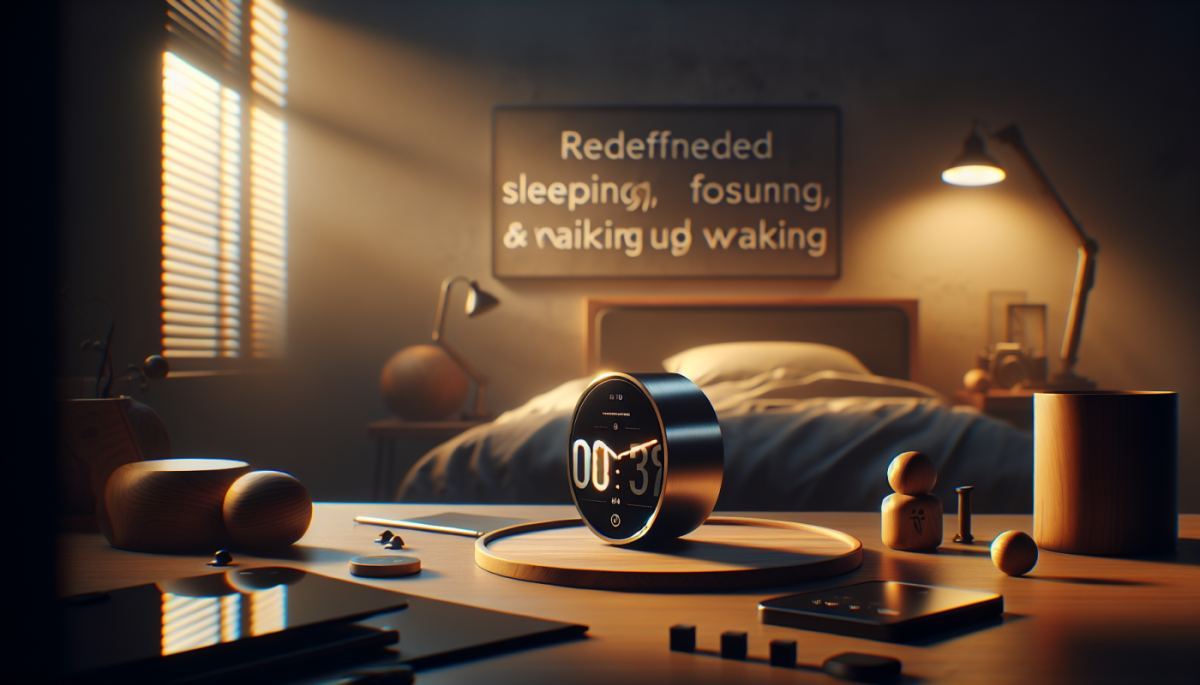
There is a quiet rebellion happening on bedside tables. For decades, the alarm clock was treated as a necessary nuisance, a device tolerated rather than considered. Then came smartphones, which absorbed the alarm function entirely and brought with them the full anxiety of the modern internet, glowing blue at 2 a.m. from six inches away from your face. Balmuda, the Japanese company that turned the humble toaster into a cult object with its steam-infused Balmuda The Toaster, is now making a case that the dedicated alarm clock deserves a serious second look.
The Clock, Balmuda's new travel-friendly timepiece, arrives with the kind of design pedigree that invites comparison. Its minimalist dial draws an unmistakable line back to Braun's legendary alarm clocks, the ones shaped in large part by Dieter Rams, the German designer whose ten principles of good design remain a foundational text in industrial design circles. But Balmuda doesn't simply replicate that aesthetic. It extends it, replacing traditional clock hands and static displays with a system that integrates light and sound to actively shape the user's physiological state across three distinct modes: sleep, focus, and waking.
This is not just a clock that tells time. It is a clock that attempts to manage time's relationship with the human body.
What Balmuda understands, and what most consumer electronics companies have been slow to internalize, is that the objects we place in our most intimate spaces are not neutral. The bedroom is a regulated environment in ways that living rooms and offices are not. Light wavelength, sound frequency, and even the visual weight of an object on a nightstand can influence cortisol rhythms, melatonin production, and the psychological transition between wakefulness and rest. Balmuda's decision to build light and sound directly into The Clock's core functionality is less a feature addition and more a design philosophy: the object should serve the body's natural cycles rather than interrupt them.
The travel-friendly form factor adds another layer of intention. Business travelers and frequent flyers are among the most chronobiologically disrupted populations on earth. Jet lag is not merely tiredness. It is a systemic desynchronization of the body's internal clock from the external environment, and it compounds over time in ways that carry genuine health consequences. A portable device designed around light and sound cues for sleep and waking is, in that context, less a luxury item and more a small piece of personal health infrastructure.
The comparison to Braun and Dieter Rams is worth sitting with for a moment. Rams famously argued that good design is as little design as possible, that objects should recede and serve. Balmuda's The Clock honors that principle visually while quietly expanding the clock's functional mandate. It is a Rams-influenced object doing something Rams-era objects could not: actively intervening in the user's neurological state.
If The Clock finds the audience it seems designed for, the more interesting story may not be about Balmuda at all. It may be about what happens when a critical mass of consumers deliberately reintroduce single-purpose, behaviorally considered devices into their bedrooms and begin removing smartphones from that space entirely.
The smartphone's colonization of the bedroom has had cascading effects that are only now being fully mapped. Sleep researchers have documented the links between screen exposure before bed and delayed sleep onset. Mental health researchers have connected the always-on notification environment to elevated baseline anxiety. The economic incentives of the attention economy are structurally opposed to rest. Every major platform is optimized for engagement, which is to say, for keeping you awake and scrolling.
A device like The Clock does not solve that system. But it creates a small, physical counter-pressure. It gives people a socially legible reason to leave their phone in another room, because the alarm function, the one thing that kept the phone on the nightstand, has been replaced. That behavioral shift, multiplied across millions of users, could meaningfully reduce the nightly engagement hours that platforms depend on. It is the kind of second-order consequence that no one in Silicon Valley is modeling, because it originates not from an app or a policy but from a beautifully designed object sitting quietly in the dark.
Balmuda has built a business on the idea that everyday objects deserve more serious attention than the market typically gives them. The Clock suggests that the next frontier for that philosophy is not aesthetics alone, but the deeper question of what our objects are quietly doing to us while we sleep.
Discussion (0)
Be the first to comment.
Leave a comment