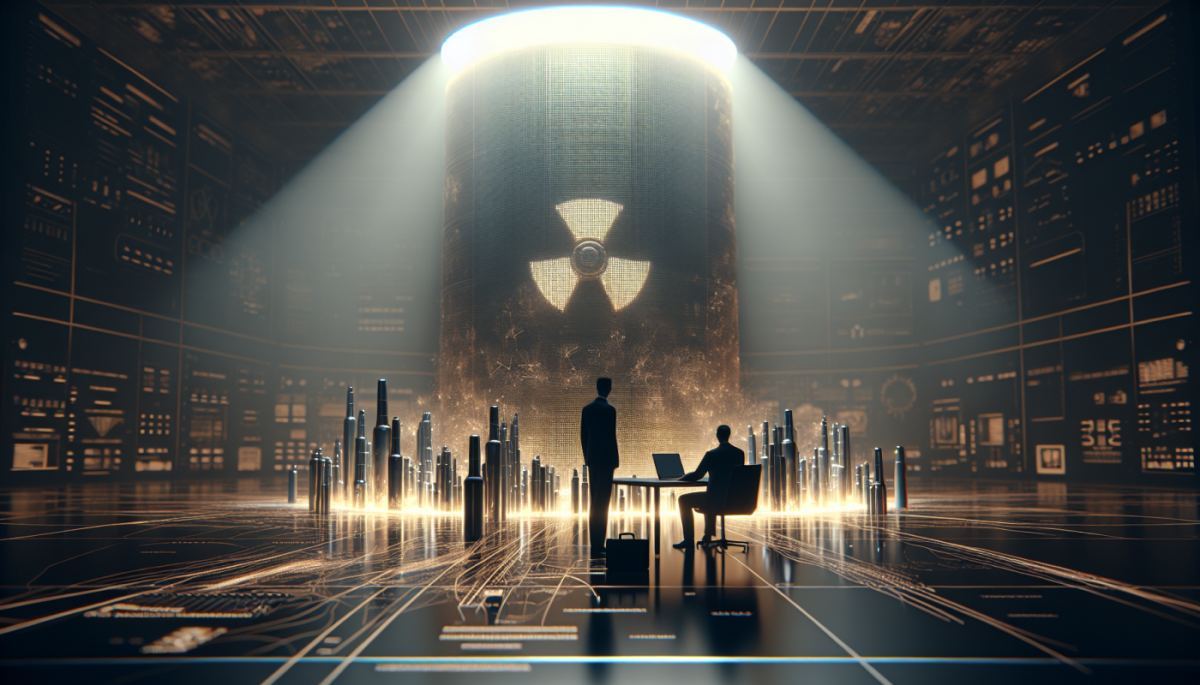
The logic seems almost too clean: take the radioactive waste from nuclear reactors, run it through another process, and extract more energy from it. Repeat until the material is far less dangerous, far less voluminous, and far more useful than it was before. This is not science fiction. The technology exists. Several countries have done it. And yet, for most of the world — and especially for the United States — spent nuclear fuel continues to pile up in temporary storage facilities, waiting for a permanent solution that has been perpetually decades away.
The core problem is that spent nuclear fuel is not simply "used up." When uranium fuel rods are pulled from a reactor after roughly three to five years of use, they still contain a significant amount of fissile material — primarily plutonium and residual uranium — that could theoretically generate more electricity. What makes them "spent" is not total depletion but a buildup of fission byproducts that absorb neutrons and reduce efficiency. In other words, the fuel still has enormous energy potential locked inside it. The question of why the world doesn't extract that potential is less a scientific question than a political, economic, and historical one.
France has long been the most prominent example of a country that chose a different path. Through its state-owned energy company Orano (formerly AREVA), France reprocesses the majority of its spent fuel at the La Hague facility in Normandy, separating usable plutonium and uranium from genuine high-level waste. That recovered material is then blended into what's called mixed oxide fuel, or MOX, and fed back into reactors. The result is a partially closed fuel cycle that reduces the volume of high-level waste requiring deep geological disposal and extracts more energy per ton of mined uranium.
The United States, by contrast, banned commercial reprocessing in 1977 under President Jimmy Carter, citing concerns that separated plutonium could be diverted to build nuclear weapons. The logic was rooted in nonproliferation anxiety during the Cold War: if the U.S. normalized reprocessing, other countries might follow, and the global spread of separated plutonium would increase the risk of nuclear proliferation. It was a calculated sacrifice — accepting a domestic waste problem in exchange for a stronger international norm against plutonium separation. That ban was technically lifted under President Reagan, but the economics never recovered, and no commercial reprocessing has taken place in the U.S. since.
The result is roughly 90,000 metric tons of spent nuclear fuel sitting in cooling pools and dry casks at reactor sites across the country, according to the U.S. Department of Energy. The planned permanent repository at Yucca Mountain in Nevada has been mired in political opposition for decades and remains unlicensed. So the waste stays where it is, accumulating.
What makes this situation a genuine systems problem rather than just a policy failure is the feedback loop it creates around nuclear energy itself. Utilities and investors considering new nuclear construction must factor in the unresolved back-end of the fuel cycle. Without a clear, legally sanctioned pathway for spent fuel — whether through reprocessing, long-term storage, or a functioning repository — the total cost and liability of nuclear power remains artificially uncertain. That uncertainty doesn't kill nuclear projects outright, but it adds a layer of risk that makes financing harder and timelines longer, which in turn slows the expansion of a low-carbon energy source at precisely the moment the grid needs it most.
Advanced reactor designs, including fast neutron reactors and certain Generation IV concepts, could theoretically consume existing spent fuel stockpiles as their primary feedstock, turning a liability into a fuel supply. Companies like TerraPower, backed in part by Bill Gates, are developing sodium-cooled fast reactors with this capability in mind. But these technologies require regulatory frameworks and fuel cycle infrastructure that don't yet exist at scale in the U.S., and building them requires political will that has historically evaporated whenever the issue becomes contentious.
The second-order consequence worth watching is this: as the clean energy transition accelerates and nuclear power regains political favor in both Washington and Brussels, the unresolved waste question will resurface with new urgency. Countries that have maintained reprocessing expertise — France, Russia, Japan to a lesser extent — will find themselves holding a significant technical and geopolitical advantage. The U.S. decision to step back from reprocessing in 1977 was made with the best of nonproliferation intentions, but it may have inadvertently ceded leadership in a technology that the next generation of nuclear energy will depend on. The waste buried in temporary casks today might look very different — more like a strategic reserve than a liability — by the time the world finally decides what to do with it.
Discussion (0)
Be the first to comment.
Leave a comment