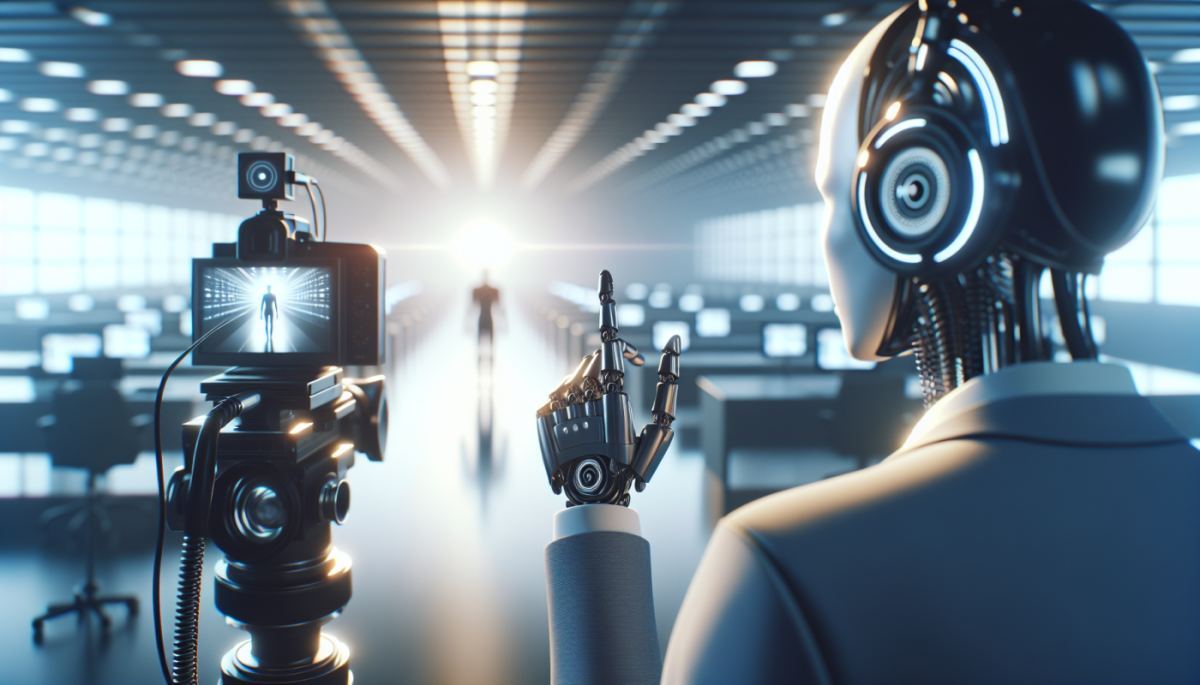
There is something quietly radical happening in the way humans talk to machines. Not the clunky command-and-response exchanges of early voice assistants, but something far more fluid, more unsettling in its naturalness. The latest wave of speech generation technology is producing voices that hesitate, breathe, and modulate in ways that blur the line between recorded human speech and synthetic audio. The implications stretch well beyond convenience.
For decades, the dominant metaphor for human-computer interaction was the tool: you picked it up, used it, put it down. Voice interfaces are dismantling that metaphor in real time. When a digital assistant sounds genuinely conversational, the psychological relationship between user and system shifts. Research in human-computer interaction has long documented what is sometimes called the "computers are social actors" effect, the tendency for people to attribute personality, intent, and even trustworthiness to systems that communicate in human-like ways. More naturalistic speech generation does not merely improve usability. It accelerates that attribution process, often without users noticing it is happening.
The engineering ambition behind modern speech generation is significant. Moving beyond flat, robotic text-to-speech, contemporary systems are trained to capture prosody, the rhythm, stress, and intonation that carry emotional meaning in spoken language. A sentence like "I can help you with that" means something different depending on where the emphasis falls, how quickly it is delivered, and whether the voice rises or falls at the end. Getting those variables right, and getting them right consistently across languages, accents, and contexts, is an enormously complex problem. The fact that frontier systems are now approaching that threshold is a genuine technical achievement.
But technical achievement and social consequence are not the same thing. As speech generation becomes more naturalistic, it becomes harder for ordinary users to maintain what might be called appropriate epistemic distance, the awareness that they are interacting with a system rather than a person. This is not a hypothetical concern. Studies of voice-based AI companions have already documented users forming emotional attachments, disclosing personal information they would not share with a human stranger, and experiencing genuine distress when services are discontinued or voices are changed. The more convincing the voice, the more potent these effects are likely to become.
This creates a feedback loop that the technology industry has not fully reckoned with. More natural voices drive higher engagement. Higher engagement generates more data. More data improves the models. Improved models produce even more natural voices. At each turn of the loop, the commercial incentive points in the same direction: make the voice more compelling, more responsive, more human-feeling. The question of whether that is always in the user's interest is rarely the loudest voice in the room.
There is also a second-order consequence that tends to get overlooked in coverage of speech AI: the effect on human-to-human communication norms. As people spend more time interacting with systems optimised to be endlessly patient, consistently pleasant, and never distracted, there is a plausible risk that expectations for human conversation begin to shift in subtle ways. If your AI assistant never interrupts, never sounds tired, and always sounds interested, what happens to tolerance for the ordinary friction of talking to another person? The long-term social texture of that shift is genuinely unknown, but it is not trivial.
The accessibility dimension of this technology deserves serious attention alongside the risks. For people with visual impairments, motor disabilities, or conditions that make reading difficult, high-quality speech interfaces are not a luxury feature. They are infrastructure. More natural, conversational voice generation can meaningfully reduce the cognitive load of navigating complex digital systems, and that matters enormously for populations who have historically been underserved by interface design that assumed a sighted, keyboard-using user.
The regulatory and ethical frameworks governing this space are still catching up. Questions about voice cloning, consent, and the disclosure requirements for synthetic speech are live debates in legislatures and standards bodies around the world. The technology is not waiting for those conversations to conclude.
What seems clear is that the era of voice as a mere input-output channel is ending. Speech is becoming the primary surface through which many people will experience AI, and the design choices embedded in how those voices sound, how they hesitate, how they express uncertainty, will carry enormous weight. The most important decisions in this space may not be technical at all.
Discussion (0)
Be the first to comment.
Leave a comment