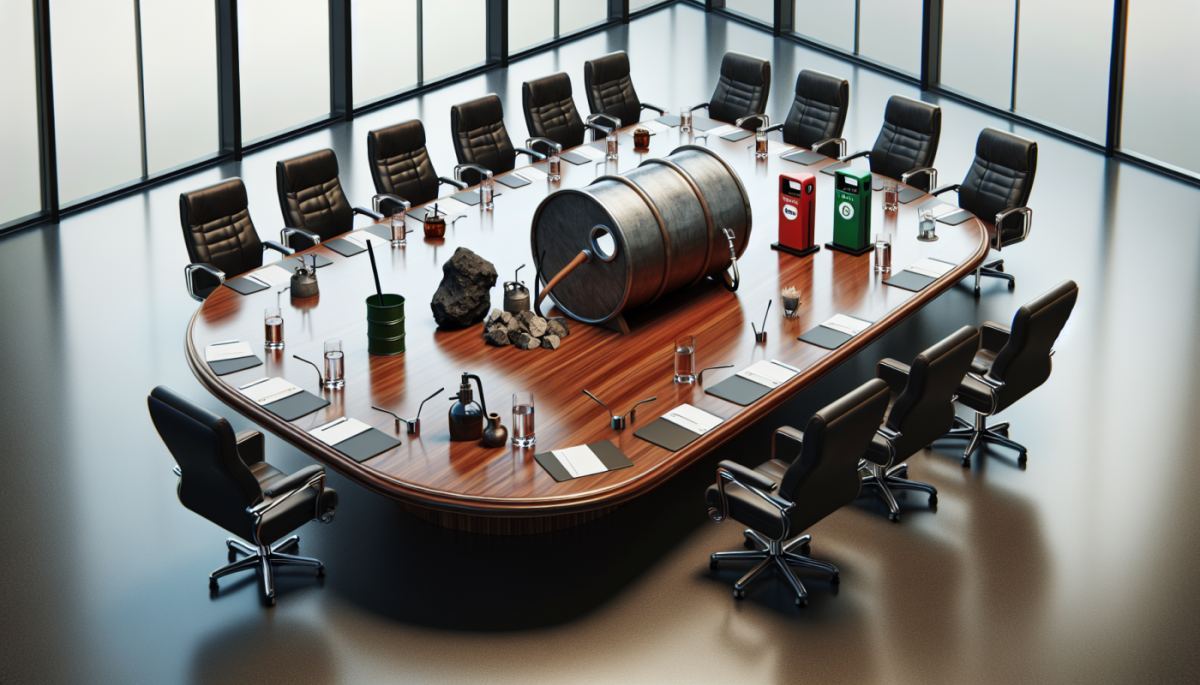
Antonio Guterres has spent years issuing some of the starkest warnings in the history of the United Nations about the dangers of fossil fuels. He has called coal, oil, and gas executives the architects of civilisational risk. So when the same man now calls for a formal platform where fossil fuel producers and consumers sit together to plan the energy transition, it is worth pausing to understand what has shifted, and what the consequences of that shift might be.
The UN Secretary-General's call for what he described as a space for "honest dialogue" is not a retreat from climate ambition. It is, at least in intent, a recognition that the current architecture of energy transition planning has a structural gap at its centre. Producers, the nations and corporations that extract and sell fossil fuels, have largely been treated as defendants in the climate conversation rather than as participants in designing its resolution. The result, Guterres warned, risks "crisis and chaos" rather than an orderly unwinding of the global economy's deepest dependency.
The logic is not difficult to follow. Countries like Saudi Arabia, Russia, Nigeria, and Iraq derive enormous shares of their national revenue from hydrocarbon exports. Without a credible economic pathway beyond oil and gas, the rational incentive for those governments is to maximise extraction while demand still exists. No amount of moral pressure changes that calculus. What might change it is a negotiated framework that addresses transition financing, alternative development models, and the sequencing of demand reduction alongside supply reduction. That is precisely what no existing multilateral forum currently does with any seriousness.
The COP process under the UNFCCC has, for three decades, carefully sidestepped the supply side of the fossil fuel equation. Agreements focus on emissions targets and national pledges, not on who stops pumping what and when. The landmark language at COP28 in Dubai calling for a "transition away" from fossil fuels was historic precisely because it was so rare, and even then it stopped well short of binding production commitments. The gap between what climate science demands and what the multilateral system has been willing to negotiate is not accidental. It reflects the enormous political weight of producer interests and the reluctance of consuming nations to acknowledge their own role in sustaining demand.
Guterres is essentially proposing to bring that submerged negotiation to the surface. The idea of a dedicated producer-consumer platform echoes earlier commodity governance experiments, including the International Energy Forum and various OPEC-IEA dialogues, though none of those were designed with climate transition as their organising purpose. Whether a new platform could achieve what those forums never attempted is an open question, but the proposal at least names the problem honestly.
There is also a harder political economy at work here. Several major fossil fuel producers have become increasingly vocal about what they see as the hypocrisy of wealthy consuming nations that built their prosperity on hydrocarbons and now demand rapid decarbonisation from economies still trying to industrialise. That grievance, however self-serving it sometimes is, contains enough truth to be politically potent. A dialogue platform that fails to address transition finance and development equity will not hold the attention of producer nations for long.
The most consequential systems-level effect of this proposal may not be the platform itself but what its existence signals about the pace of unilateral climate action. If major emitting nations and institutions begin to wait for a consensus-based producer-consumer framework before accelerating decarbonisation policy, the platform could inadvertently function as a delay mechanism. History offers cautionary precedents: multilateral processes designed to manage difficult transitions have a documented tendency to extend the timelines of the very changes they are meant to facilitate.
There is also the question of who defines "honest dialogue." Fossil fuel companies have invested heavily in shaping the terms of energy transition conversations, funding think tanks, sponsoring climate conferences, and lobbying for carbon capture and hydrogen pathways that extend the commercial life of their core assets. A platform without rigorous rules on participation and conflict of interest could become a venue for managed delay dressed in the language of cooperation.
None of this means Guterres is wrong to try. The alternative, a transition that proceeds without the buy-in of major producers, carries its own serious risks of supply shocks, geopolitical instability, and stranded-asset crises that fall hardest on the poorest economies. The question is whether the international system has the institutional imagination and the political will to build something genuinely new, rather than another forum that talks carefully around the thing it was created to resolve.
If that platform ever convenes in earnest, the first test of its seriousness will be whether the word "phaseout" appears anywhere in its founding mandate.
Discussion (0)
Be the first to comment.
Leave a comment