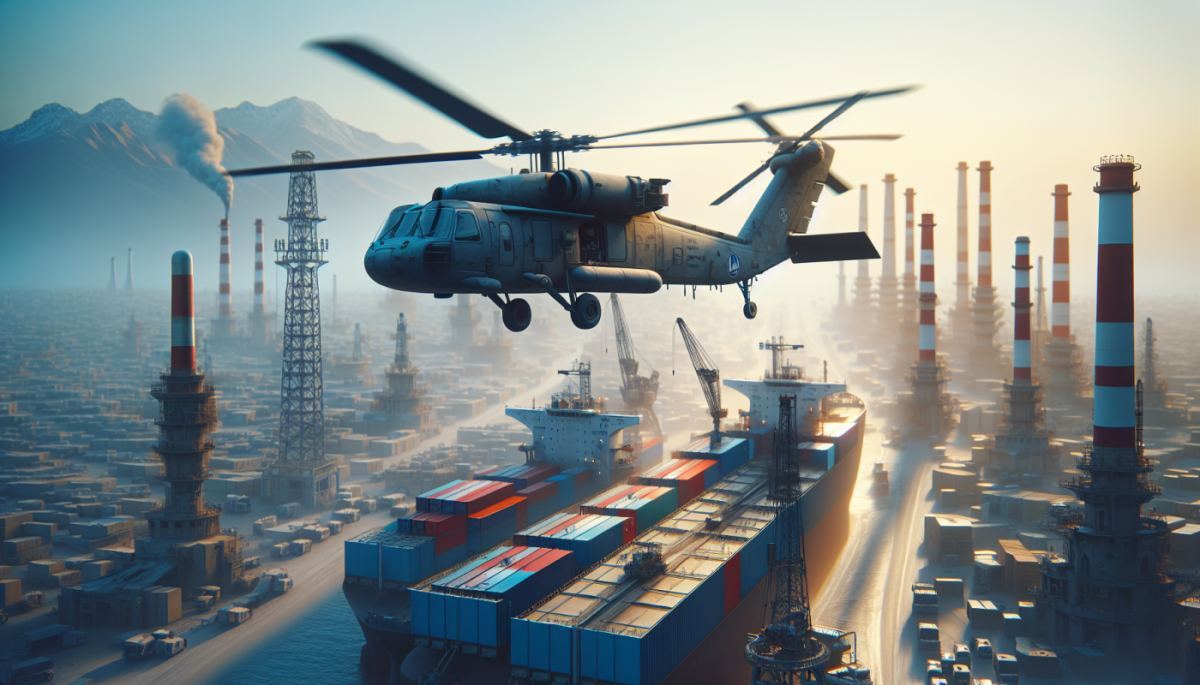
When missiles fly over the Strait of Hormuz, most analysts reach immediately for the oil price chart. It is the reflex of decades, the assumption that Middle East conflict equals energy shock, full stop. But the current tensions surrounding Iran are producing something more diffuse and arguably more dangerous: a slow-moving disruption of the chemical and fuel feedstocks that underpin modern industrial civilization, from the wheat fields of the American Midwest to the pharmaceutical labs of northern Europe.
The Strait of Hormuz is not merely an oil corridor. Roughly 20 percent of the world's liquefied natural gas passes through it, along with enormous volumes of petrochemical feedstocks including naphtha, methanol, and urea. These are not household names, but they are the invisible skeleton of the global economy. Naphtha cracks into ethylene and propylene, the building blocks of plastics. Methanol feeds into formaldehyde, acetic acid, and a cascade of industrial chemicals. Urea is the world's most widely used nitrogen fertilizer. Disrupt the flow of any one of these, and the consequences ripple outward with a logic that is easy to underestimate and very hard to reverse.
Agriculture is perhaps the most immediately vulnerable sector. Iran is a significant producer of urea and ammonia, and regional instability has already tightened spot markets for nitrogen fertilizers at a moment when farmers in the northern hemisphere are making planting decisions. Fertilizer prices are acutely sensitive to natural gas costs, since gas is the primary feedstock for ammonia synthesis via the Haber-Bosch process. When LNG freight rates spike on war-risk premiums, the cost signal travels directly into the price of growing food. Farmers who locked in fertilizer contracts early are insulated for now, but those buying on the spot market are absorbing shocks that will eventually show up in food prices at the retail level, likely with a lag of six to eighteen months.
This is a classic second-order effect that commodity markets routinely misprice. Traders watch crude benchmarks obsessively while the slower, stickier disruptions in agricultural chemistry accumulate beneath the surface. The 2022 shock following Russia's invasion of Ukraine offered a preview: natural gas disruptions in Europe cascaded into fertilizer plant shutdowns, which cascaded into reduced crop yields, which cascaded into food inflation that hit lower-income countries with devastating force. The mechanism is the same now, even if the geography differs.
The pharmaceutical industry faces a related but distinct vulnerability. A significant share of active pharmaceutical ingredients and their precursor chemicals are synthesized from petrochemical feedstocks, many of which are sourced or transshipped through the Gulf region. Isopropanol, ethylene oxide, and various chlorinated solvents all have supply chains that touch the Middle East either directly or through pricing linkages. Specialty chemical manufacturers in India, which supplies roughly 20 percent of the world's generic medicines, are particularly exposed to feedstock cost volatility because their margins are thin and their ability to pass costs downstream is constrained by government drug pricing controls.
The feedback loop here is insidious. Higher feedstock costs compress margins for Indian generic manufacturers, some of whom respond by deferring maintenance, reducing quality controls, or simply exiting lower-margin product lines. The result is not a dramatic shortage that triggers headlines, but a gradual erosion of supply diversity that makes the global medicine supply more brittle over time. Regulators in the United States and Europe have spent years warning about overconcentration in generic drug supply chains following COVID-era shortages. The Iran conflict is stress-testing exactly those vulnerabilities, quietly and without the drama of an oil price spike.
What makes the current situation particularly difficult to manage is the compounding nature of the disruptions. Shipping insurers have raised war-risk premiums for Gulf transits, which increases freight costs across all commodity categories simultaneously. That is not a single supply shock but a tax on the entire system of global trade that flows through the region. Companies that can absorb the cost will pass it on. Companies that cannot will cut corners, defer investment, or withdraw from markets entirely.
The oil price chart will eventually settle, as it always does. The subtler damage to fertilizer markets, pharmaceutical supply chains, and industrial chemical networks will take considerably longer to repair, and the political will to address it tends to arrive only after the consequences have already become unavoidable. The more instructive question for the months ahead is not what crude does on any given morning, but which factory in which country quietly stops running because a feedstock it assumed would always be available has suddenly become too expensive to justify.
Discussion (0)
Be the first to comment.
Leave a comment