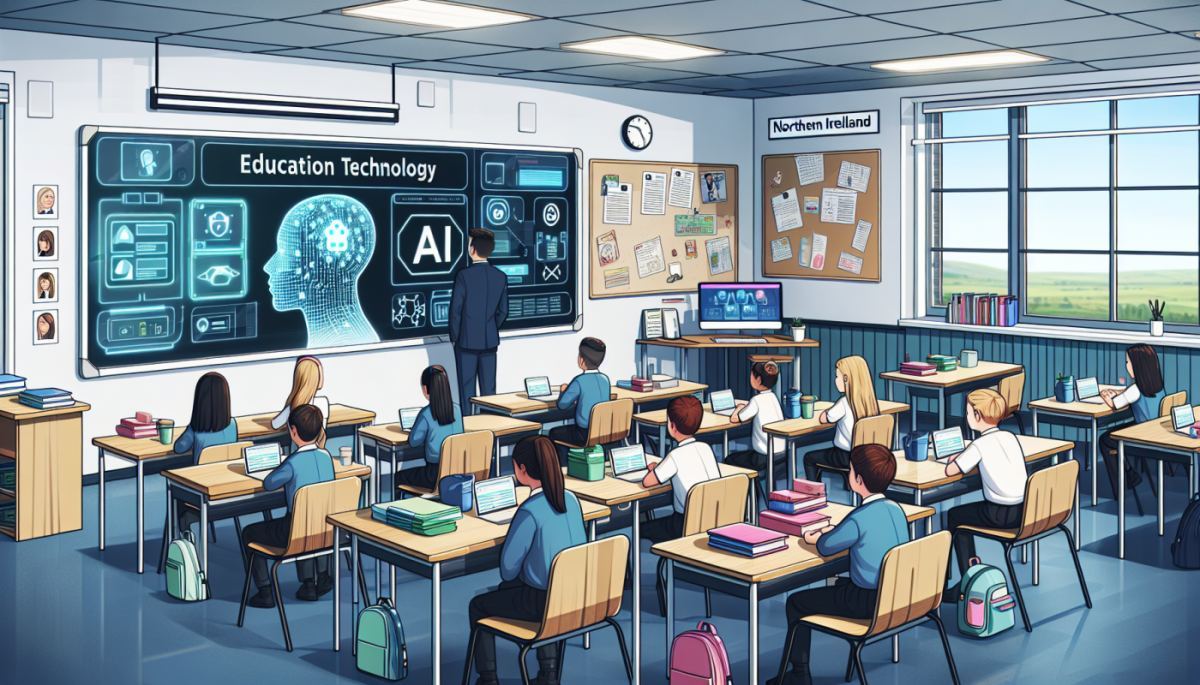
Ten hours. That is roughly a quarter of a standard working week, and it is what teachers in Northern Ireland are reportedly reclaiming after a six-month pilot program embedded generative AI tools into their daily routines. The initiative, run through the Northern Ireland Education Authority's C2k program, used Google's Gemini alongside other AI tools to automate or accelerate the administrative and preparatory work that quietly consumes a teacher's professional life. The results are striking enough to warrant a harder look at what is actually happening beneath the surface.
To understand why 10 hours matters so much, you have to understand where those hours were going in the first place. Teachers in the United Kingdom consistently report spending enormous portions of their week on tasks that have nothing to do with standing in front of students: writing lesson plans, drafting reports, differentiating materials for students with varying needs, responding to administrative requests, and preparing assessments. A 2023 report from the National Foundation for Educational Research found that teacher workload remains one of the primary drivers of attrition in UK schools, with many professionals leaving the profession within five years of qualifying. Northern Ireland is not immune to this pressure. The province has faced its own recruitment and retention challenges, and the C2k initiative appears to have been designed, at least in part, as a structural response to that slow bleed.
What Gemini and similar tools appear to be doing is absorbing the lower-cognitive-load tasks: generating first drafts of lesson materials, summarising curriculum documents, producing differentiated versions of worksheets, and helping teachers structure written feedback at scale. None of this replaces the relational, improvisational work that defines good teaching. But it does clear the undergrowth, and that clearing has a compounding effect. A teacher who is not spending Sunday evening writing five variations of the same worksheet is a teacher who arrives Monday morning with more cognitive and emotional reserves. That is not a trivial outcome.
Here is where systems thinking becomes essential. If AI tools genuinely restore 10 hours per week to teachers, the downstream effects extend well beyond individual wellbeing. The most immediate second-order consequence is retention. If experienced teachers stay in the profession longer because the administrative burden has been reduced, schools preserve institutional knowledge that is extraordinarily difficult to replace. A teacher with 15 years of experience carries an understanding of their students, their community, and their craft that no onboarding process can replicate. Retaining that person is worth far more than the cost of a software license.
But there is a subtler loop worth watching. As AI tools become embedded in school systems, they will inevitably begin to shape what teachers are expected to produce. If a principal knows that lesson planning now takes 20 minutes instead of two hours, the temptation to fill that reclaimed time with new administrative demands is real. Bureaucracies have a well-documented tendency to expand into available capacity. The risk is not that AI fails to save time, but that the time it saves gets quietly reallocated by institutional pressure rather than returned to teachers as genuine relief. The C2k pilot will need longitudinal follow-up to determine whether the 10-hour saving persists once the novelty fades and expectations adjust.
There is also a question of equity. C2k is a managed service that gives Northern Ireland schools a relatively standardised technology infrastructure, which means this pilot had an unusually level playing field. Scaling similar programs across England, Wales, or Scotland, where school technology provision is far more fragmented, would produce uneven results. Schools in wealthier areas with stronger IT support would likely extract more value from AI tools than those in underfunded districts, potentially widening an already significant resource gap.
The Northern Ireland pilot is not a solution to the teaching profession's structural problems. Workload, pay, and the emotional weight of the job are systemic issues that no chatbot can resolve. But 10 hours is a real number, and real numbers have real consequences. If the education system is serious about keeping good teachers in classrooms, the more interesting question now is not whether AI can help, but whether the institutions surrounding teachers will have the discipline to let it.

Discussion (0)
Be the first to comment.
Leave a comment