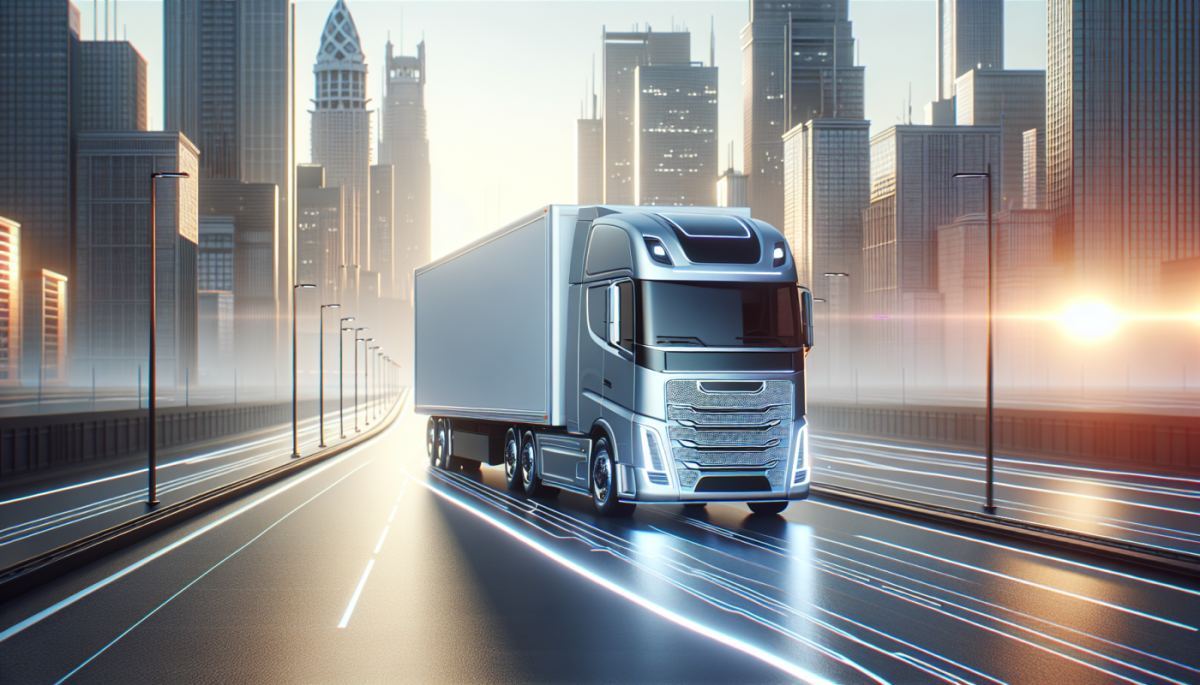
Raquel Urtasun has watched the self-driving industry cycle through more mood swings than most technologies ever survive. She was there for the early dismissals, the breathless optimism of the mid-2010s, the sobering crashes and regulatory reckonings, and the quiet retreat of companies that once promised robotaxis within the year. Now, as founder and CEO of Waabi Innovation Inc., she is riding what she believes is a fundamentally different wave, one built not on brute-force sensor stacking but on generative AI and a more principled approach to machine learning.
Waabi, which Urtasun launched in 2021 after leaving her role as chief scientist at Uber ATG, is focused exclusively on Level 4 autonomous trucking, meaning the system drives itself with no human intervention required within a defined operational domain. That focus is deliberate. Long-haul freight moves along predictable highway corridors, avoids the chaotic unpredictability of dense urban streets, and represents a market with enormous economic pressure to automate. The American Trucking Associations has long documented a structural driver shortage that runs into the tens of thousands, and that gap is expected to widen as the existing driver workforce ages.
What separates Waabi's pitch from the previous generation of autonomous vehicle companies is its foundational bet on generative AI and simulation. Rather than relying primarily on billions of miles of real-world driving data, Waabi uses a system it calls Waabi World, a generative simulator capable of producing synthetic training scenarios at scale. The logic is straightforward but consequential: the rarest and most dangerous driving situations, the ones that actually matter for safety, are by definition underrepresented in real-world datasets. A simulator that can generate and stress-test edge cases on demand sidesteps that bottleneck entirely.
Urtasun's academic background gives this approach credibility that a pure startup pitch might lack. As a professor at the University of Toronto and a former faculty member whose work shaped modern probabilistic deep learning for autonomous systems, she has spent 16 years thinking about the mathematical foundations of machine perception. That pedigree attracted serious capital. Waabi has raised funding from investors including Khosla Ventures and has built a commercial partnership with Uber Freight, which gives it a direct pipeline into real freight demand without having to build a logistics network from scratch.
The partnership structure itself is worth examining as a systems-level decision. Earlier autonomous trucking companies, including some that have since scaled back or shut down, tried to own the entire stack: the technology, the trucks, the freight relationships, and sometimes the terminals. That vertical integration strategy burned capital at a rate the market eventually stopped tolerating. Waabi's approach of embedding its technology into an existing freight marketplace is leaner, but it also means the company's success is partially coupled to Uber Freight's own competitive position in a crowded logistics market.
The autonomous vehicle industry's history is a useful warning against assuming that the current optimism is structurally different from the last round. The companies that stumbled did not fail because their engineers were incompetent. They failed because the problem turned out to be harder than their timelines assumed, because regulatory frameworks moved slower than their business models required, and because the capital markets that funded them eventually demanded returns on a schedule that the technology could not meet.
Waabi is not immune to those pressures. Level 4 trucking on defined highway routes is genuinely more tractable than urban robotaxis, but it is not solved. Weather variability, construction zones, unexpected debris, and the behavior of human drivers around large autonomous vehicles all remain live challenges. The Federal Motor Carrier Safety Administration and the National Highway Traffic Safety Administration are still developing the regulatory frameworks that will govern commercial autonomous freight at scale, and those processes move on political timelines that no amount of engineering excellence can accelerate.
The second-order consequence that rarely gets discussed is what successful autonomous trucking does to the communities built around the existing trucking economy. Truck stops, roadside diners, motels along interstate corridors, and the small towns that depend on driver traffic represent a diffuse economic ecosystem that would face quiet erosion long before any headline announced its decline. The technology's rollout would not arrive as a single disruption but as a slow pressure, invisible in any given quarter but cumulative over a decade.
Urtasun has navigated enough cycles to know that the gap between a working demonstration and a deployed commercial system is where companies go to die. The question Waabi is really answering is not whether generative AI can train a better autonomous driver. It is whether the company can survive long enough, and scale carefully enough, to find out.
References
- American Trucking Associations (2023) — ATA Driver Shortage Report
- Hawkins, A. (2023) — Waabi is using generative AI to train self-driving trucks
- National Highway Traffic Safety Administration (2023) — Automated Vehicles for Safety
- Korosec, K. (2021) — Waabi emerges from stealth with $83.5M to commercialize self-driving trucks

Discussion (0)
Be the first to comment.
Leave a comment