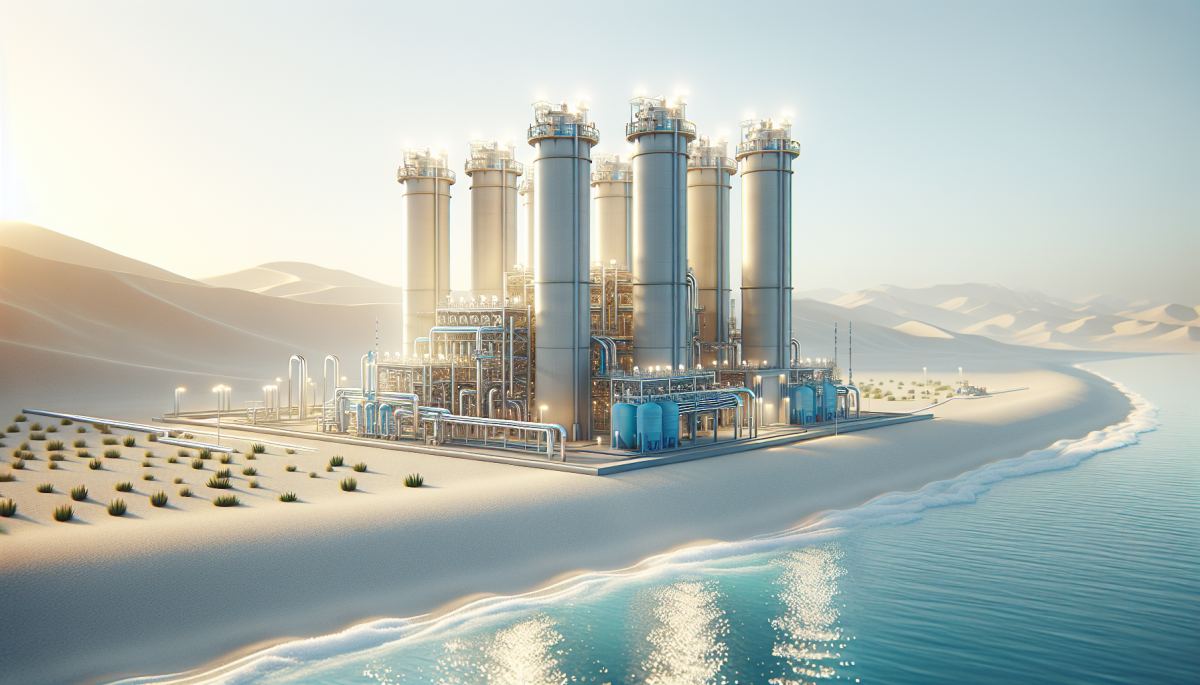
Water has always been a strategic resource, but the escalating conflict involving Iran has exposed something that planners and engineers have quietly worried about for years: the extraordinary fragility of desalination infrastructure in one of the world's most water-scarce regions. Across the Middle East, nations have built their water security almost entirely on the assumption of peace, or at least on the assumption that certain critical systems would remain off-limits. That assumption is now being tested.
The Persian Gulf region is home to some of the largest and most concentrated desalination capacity on earth. Saudi Arabia, the UAE, Kuwait, Qatar, and Bahrain collectively depend on desalinated water for the overwhelming majority of their municipal supply. In Kuwait, that figure approaches 100 percent. These are not supplementary systems — they are the only systems. There is no meaningful aquifer backup, no river to fall back on, no rainfall pattern that could sustain urban populations at current densities. When engineers talk about single points of failure in critical infrastructure, desalination plants in the Gulf represent one of the most consequential examples anywhere on the planet.
The design logic behind Gulf desalination has always prioritized throughput and cost over redundancy. Most of the region's capacity relies on either multi-stage flash distillation or reverse osmosis, both of which require continuous energy input, sophisticated membrane or thermal components, and stable supply chains for maintenance parts — many of which originate outside the region. A strike on a major facility, or even a sustained disruption to the fuel supply feeding its power systems, could cut water output to a city of millions within days. Unlike electricity grids, where demand can be throttled and generation can be rerouted, water systems have almost no buffer. Residential storage tanks might buy a household 24 to 72 hours. After that, the consequences become medical.
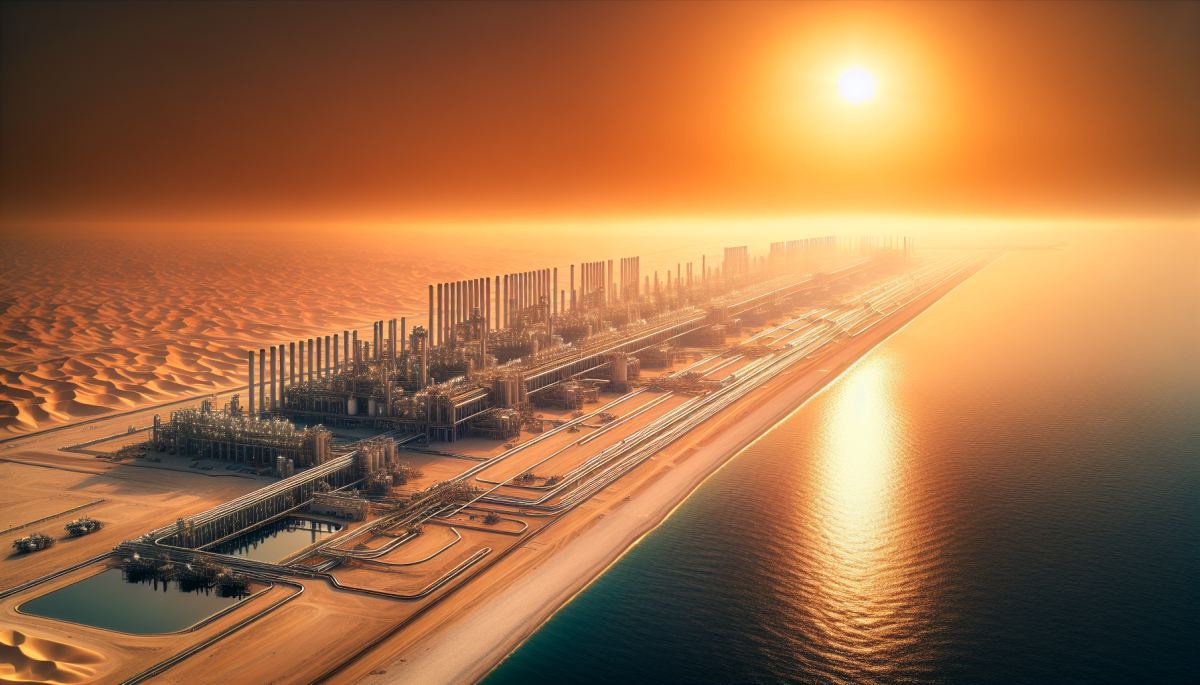
What makes the current moment particularly alarming from a systems perspective is the geographic concentration of risk. Several of the Gulf's largest desalination complexes sit along coastlines that are now within realistic range of drone and missile strikes, given the trajectory of regional conflict. The Ras Al-Khair plant in Saudi Arabia, one of the largest in the world, produces over a million cubic meters of water per day. Facilities of that scale are not easily replaced or quickly repaired. The supply chains for large reverse osmosis membranes, high-pressure pumps, and specialized alloys used in thermal desalination are long, and global manufacturing capacity for these components is limited.
The second-order effects of a serious desalination disruption in the Gulf would reach far beyond the immediate population. The region is a critical node in global energy infrastructure, and the workforce maintaining oil and gas production requires water. A prolonged water crisis would trigger humanitarian emergency protocols, likely drawing in international actors and aid organizations in ways that would further complicate an already volatile geopolitical situation. It would also accelerate migration pressures, as urban populations in affected countries have limited options for internal relocation to water-secure areas — because no such areas exist at scale.
There is also a feedback loop that rarely gets discussed: the energy-water nexus. Desalination is extraordinarily energy intensive, and the Gulf's desalination capacity is largely powered by the same fossil fuel infrastructure that makes the region geopolitically significant in the first place. An attack that disrupts both energy production and water production simultaneously — which the geographic co-location of these facilities makes plausible — would create compounding failures that no single emergency response system is designed to handle.
For years, international security analysts have flagged water infrastructure as an underappreciated target in modern conflict, and the laws of war technically prohibit attacks on civilian water systems under the Geneva Conventions. But legal frameworks have proven poor deterrents when strategic incentives are strong enough, and the Middle East's desalination network has never faced a threat environment quite like this one.
The uncomfortable truth is that the region's water security was always a bet on stability. As that bet looks increasingly uncertain, the engineering question of how to build genuine resilience into systems designed for a more peaceful world is becoming, with some urgency, a political one.
References
- Elimelech et al. (2011) — The Future of Seawater Desalination: Energy, Technology, and the Environment
- ICRC (2020) — Water and War: The Protection of Water Infrastructure Under International Humanitarian Law
- Cooley et al. (2013) — Desalination and Energy: Strengthening Links
- World Bank (2018) — Beyond Scarcity: Water Security in the Middle East and North Africa
Discussion (0)
Be the first to comment.
Leave a comment