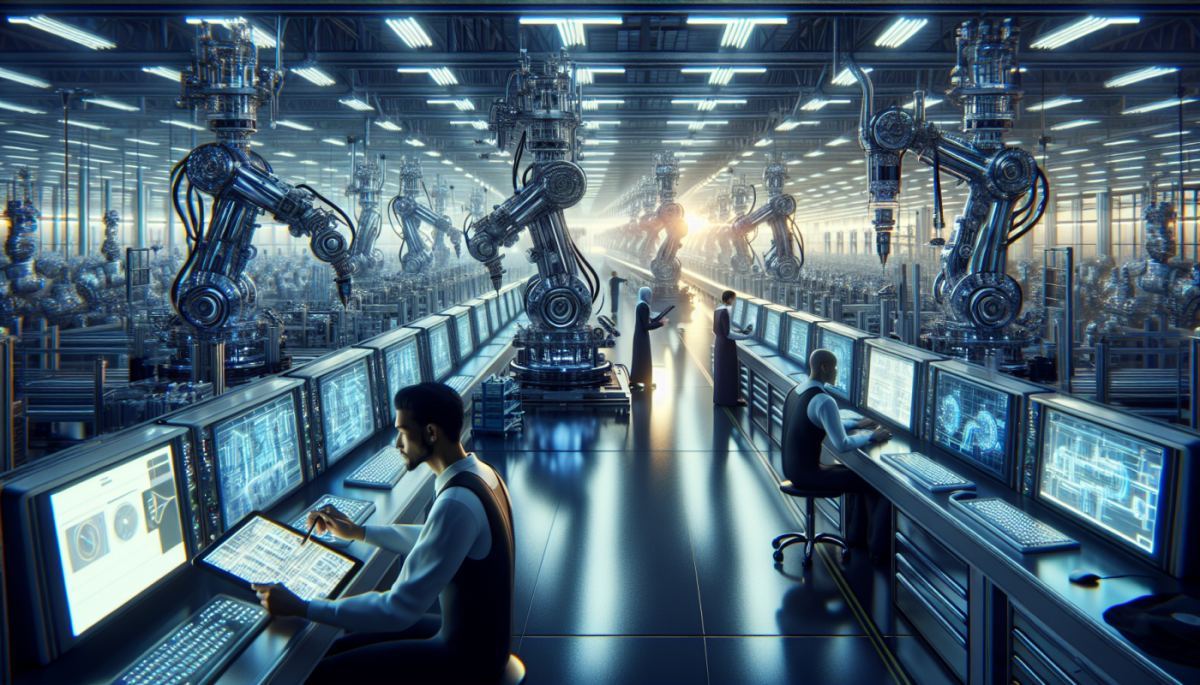
For decades, the promise of manufacturing automation was essentially a promise of subtraction: fewer errors, fewer idle hours, fewer variables left to human inconsistency. The machines got faster, the assembly lines got leaner, and the gains were real. But somewhere along the way, the logic of subtraction ran out of room. Labor shortages deepened. Product complexity multiplied. And the pressure to innovate faster while keeping quality and safety intact created a kind of operational paradox that traditional automation was never designed to solve.
That is the context in which physical AI is arriving on the factory floor, and it represents something genuinely different from what came before.
Where conventional industrial automation executes fixed sequences with precision, physical AI systems are designed to perceive, adapt, and respond to conditions that were not explicitly programmed in advance. These are robots and autonomous systems that can interpret their environment in real time, adjust their behavior based on what they observe, and collaborate with human workers rather than simply replace them. The distinction matters enormously. A traditional robotic arm on an assembly line is essentially a very fast, very reliable machine following instructions. A physical AI system is something closer to a trained colleague: capable of judgment, however narrow, within its operational domain.
The timing of this shift is not accidental. Manufacturers across sectors have spent the better part of the last five years confronting a labor market that no longer behaves the way their workforce planning models assumed it would. Skilled technicians are harder to recruit and harder to retain. The institutional knowledge embedded in experienced workers is retiring faster than it can be transferred. And the kinds of tasks that remain stubbornly difficult to automate, the ones requiring dexterity, contextual awareness, or real-time problem-solving, are precisely the tasks that physical AI is now being engineered to handle.
This creates a feedback loop worth paying attention to. As physical AI systems become more capable of handling complex, judgment-intensive tasks, the economic case for deploying them strengthens. As more manufacturers deploy them, the data those systems generate accelerates their improvement. The companies that move early accumulate a compounding advantage, not just in operational efficiency but in the quality of the AI models they are training on real-world production data. Those that wait are not simply delaying a capital investment. They are potentially falling behind in a capability race that will be very difficult to close later.
The safety dimension adds another layer of urgency. Modern manufacturing environments are under intense scrutiny from regulators, insurers, and consumers who want assurance that complex, high-stakes production processes are being managed responsibly. Physical AI, when properly implemented, offers something traditional automation cannot: the ability to monitor conditions continuously, flag anomalies before they become failures, and adapt to unexpected situations without halting an entire line. That is not just an efficiency argument. It is a risk management argument, and in industries where a single quality failure can trigger recalls, liability exposure, or reputational damage, it carries significant weight.
What tends to get underreported in the enthusiasm around physical AI is the organizational transformation it demands alongside the technological one. Deploying these systems is not a matter of swapping out old equipment for new equipment. It requires rethinking how work is structured, how human roles are defined, and how decisions get made on the floor. The manufacturers who treat physical AI as a drop-in upgrade will likely be disappointed. Those who treat it as an invitation to redesign their operations from first principles stand to gain something more durable than efficiency: genuine competitive differentiation.
There is also a geopolitical dimension emerging quietly in the background. Nations that develop strong physical AI manufacturing capabilities are building an industrial base that is less vulnerable to labor cost arbitrage and supply chain disruption. The country or region that leads in physical AI deployment is not just producing goods more efficiently. It is producing them in a way that is structurally harder for lower-cost competitors to replicate simply by offering cheaper labor. That changes the long-term map of global manufacturing in ways that trade policy alone cannot.
The manufacturers asking the right questions right now are not asking whether to adopt physical AI. They are asking how fast they can build the internal competency to use it well, because the window in which early adoption confers a meaningful advantage is almost certainly narrower than it looks.
Discussion (0)
Be the first to comment.
Leave a comment