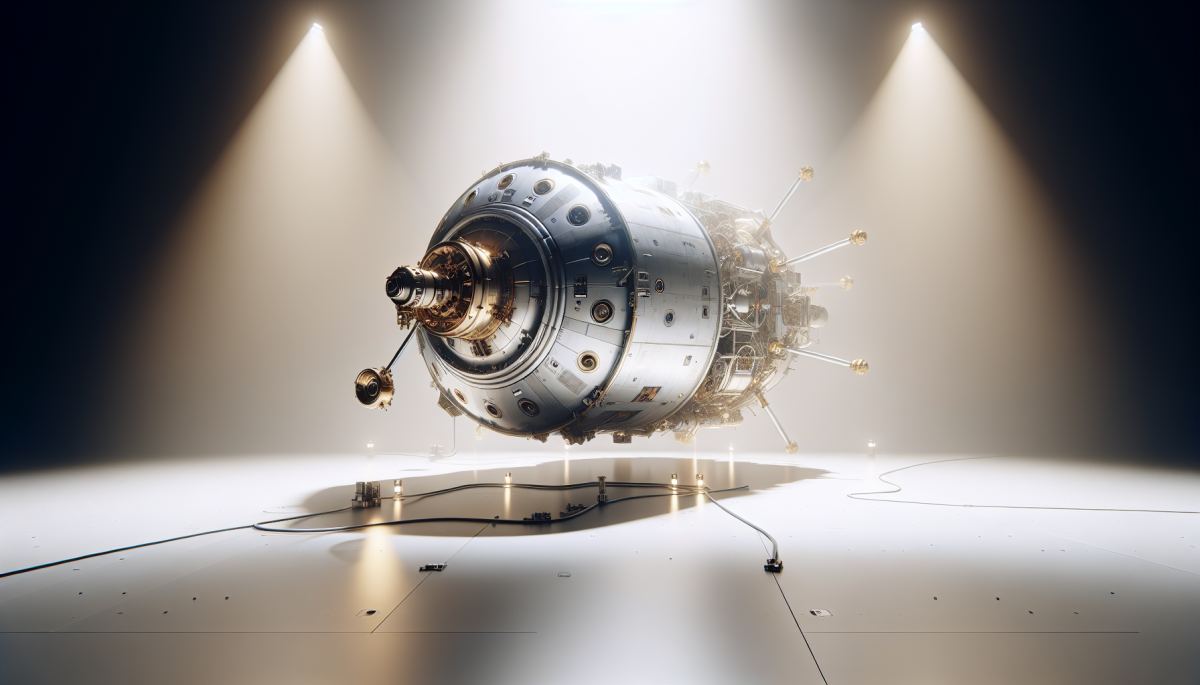
The Orion spacecraft completed its Artemis I mission in December 2022 and is now being prepared for Artemis II, the first crewed lunar flyby since Apollo 17. But quietly threading through NASA's progress reports is a persistent mechanical problem that deserves more scrutiny than it has received: helium leaks in Orion's service module propulsion system. The leaks appeared on Artemis I, showed up again during Artemis II ground testing, and NASA has now confirmed that the next crewed flight will require a redesign of the valves responsible.
NASA engineers have determined that the helium leak on Artemis II poses no threat to crew safety during reentry, which is the most critical phase of the mission. That reassurance matters, and it should not be minimized. But the fact that the same class of problem has now surfaced across two consecutive missions, and that the agency is proceeding with Artemis II while simultaneously planning a hardware redesign for Artemis III, raises questions about how NASA manages known risk in a program already under intense schedule and budget pressure.
Helium is used in spacecraft propulsion systems as a pressurant, pushing propellant into the engines. It is inert, which makes it safe, but leaks in the pressurization system can reduce the margin available for propulsion maneuvers. On a lunar mission, where precise burns determine whether a crew returns home on the planned trajectory or faces a contingency scenario, propulsion margin is not an abstraction. It is a lifeline.

What makes this situation worth examining carefully is not any single leak in isolation, but the pattern. Engineering anomalies happen. Spacecraft are extraordinarily complex machines operating in brutal environments. What systems thinkers watch for is whether an anomaly is truly isolated or whether it reflects a systemic condition, a design assumption that does not hold up under real-world stress, a manufacturing tolerance that is too tight, or a component that was qualified under conditions that do not fully represent flight.
The fact that helium leaks appeared on Artemis I and then again on Artemis II ground hardware suggests the latter. The valves in question appear to have a recurring vulnerability, and NASA's decision to redesign them for Artemis III is essentially an acknowledgment that the original design was not robust enough for the mission profile. That is not a scandal. Iterative redesign is how aerospace engineering works. But it does mean that Artemis II will fly with hardware that the agency already knows it needs to improve.
This is where the second-order consequences become interesting. NASA is operating Orion under a broader institutional pressure cooker. The Space Launch System and Orion program have faced years of cost overruns and schedule delays. The Government Accountability Office has repeatedly flagged Artemis as a program at risk. In that environment, the incentive to press forward rather than pause and fix is powerful, perhaps uncomfortably so. The agency must balance the engineering conservatism that kept Apollo crews alive against the political and budgetary reality that delays carry their own costs, including the risk of program cancellation.
The redesign planned for Artemis III introduces its own layer of complexity. New valve designs must be tested, qualified, and integrated into a spacecraft that is already deeply engineered. Any change to a pressurization system requires careful analysis of how it interacts with the rest of the propulsion architecture. If the redesign introduces unexpected behavior, the discovery could come during ground testing, which is manageable, or during flight, which is not.
There is also a supply chain dimension. Orion's service module is built by the European Space Agency and its industrial partners, primarily Airbus Defence and Space. Coordinating a hardware redesign across an international partnership, with different procurement systems, regulatory frameworks, and engineering cultures, adds friction that purely domestic programs do not face. The timeline pressure does not ease just because the fix requires transatlantic collaboration.
What this story ultimately illustrates is how the margin between acceptable risk and unacceptable risk in human spaceflight is managed not in a single dramatic decision, but in dozens of smaller ones, each reasonable on its own terms, each adding a small increment to the overall risk profile. NASA's judgment that the Artemis II leak is manageable may well be correct. But the agency's willingness to fly a known-imperfect system while redesigning it for the next mission is a reminder that spaceflight safety is always a negotiation between what is ideal and what is achievable. The crews who fly these missions deserve to know that negotiation is being conducted with full transparency, and so does the public funding it.
Discussion (0)
Be the first to comment.
Leave a comment