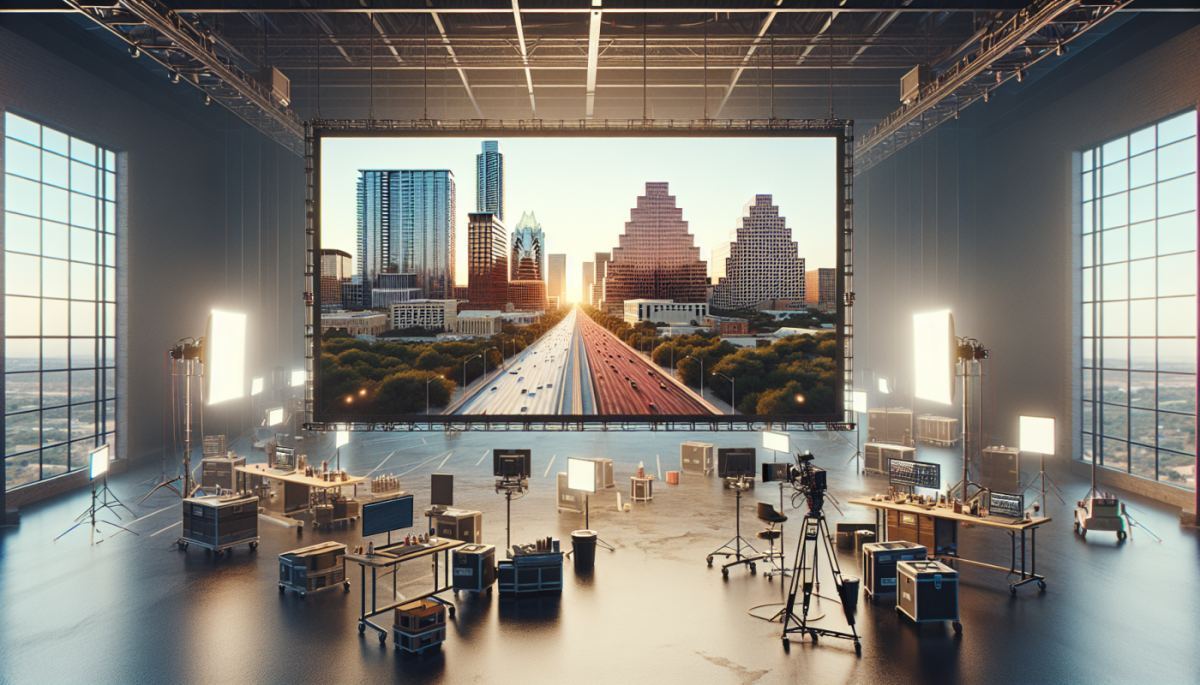
Elon Musk has announced plans to build a chip manufacturing facility in Austin, Texas, to be called Terafab, a joint operation between Tesla and SpaceX. The stated ambition is sweeping: produce semiconductors at scale to power robotics, artificial intelligence systems, and space-based data centers across Musk's constellation of companies. The announcement is short on technical specifics but long on strategic intent, and that intent deserves serious scrutiny.
At its core, Terafab is a vertical integration play. Musk has watched, with visible frustration, as his companies have remained dependent on a global chip supply chain that has proven fragile, politically exposed, and increasingly contested. The semiconductor shortages that rippled through the automotive and tech sectors between 2021 and 2023 were a live demonstration of what happens when a company's most critical inputs are controlled by someone else. Tesla, which designs its own AI training chips and inference hardware, still relies on outside foundries to actually manufacture them. SpaceX similarly depends on third-party suppliers for the radiation-hardened and high-performance chips its systems require. Terafab, if it materializes, would close that loop.
The logic is not new. Apple spent years designing its own silicon before the M-series chips gave it a decisive performance and efficiency advantage over competitors still buying off-the-shelf processors. NVIDIA built its dominance not just by designing GPUs but by cultivating an entire software and hardware ecosystem around them. What Musk appears to be attempting is something more audacious: a single facility feeding chips into at least three distinct industrial verticals simultaneously, robotics through Tesla's Optimus program, AI compute for xAI and Tesla's Dojo supercomputer ambitions, and space infrastructure through SpaceX's Starlink and future orbital data center concepts.

Musk's concern about the chip industry's capacity to meet future demand is shared widely across the executive class. The concentration of advanced semiconductor manufacturing in Taiwan, specifically at TSMC, has become one of the most discussed systemic risks in global technology. The CHIPS and Science Act, signed into law in 2022, was Washington's explicit acknowledgment that this concentration is a national security problem, not just a business one. Billions in federal subsidies have since flowed toward domestic fab construction, with TSMC, Intel, and Samsung all announcing or expanding U.S. facilities.
Terafab enters this landscape as a private, mission-driven alternative to the subsidy-chasing fab race. Whether it can compete technically is a genuine open question. Building a leading-edge semiconductor fab is one of the most capital-intensive and technically demanding undertakings in modern industry. TSMC's most advanced nodes required decades of accumulated process knowledge and supplier relationships that cannot simply be replicated by ambition and funding. If Terafab targets more specialized, application-specific chips rather than competing at the bleeding edge of process nodes, the calculus changes considerably. Chips designed specifically for Optimus robots or Starlink satellites do not necessarily need to be manufactured at 3 nanometers to be effective.
The more interesting systemic consequence of Terafab may not be what it produces, but what it signals to the broader market. If a private company can credibly threaten to exit the merchant chip ecosystem entirely, it changes the negotiating dynamics for every other large buyer. Apple's move to custom silicon did not just benefit Apple; it pressured Qualcomm, Intel, and AMD to accelerate their own roadmaps. A Musk-controlled fab, even an imperfect one, introduces a new variable into the supply equations that TSMC, Samsung, and their customers have been optimizing around for years.
There is also a labor and talent dimension that Austin will feel acutely. Semiconductor fabrication requires a highly specialized workforce, and the existing domestic talent pipeline is thin. The CHIPS Act recognized this explicitly, pairing its capital subsidies with workforce development provisions. Terafab would be competing for the same engineers, technicians, and process specialists that Intel is recruiting for its Ohio fabs and TSMC is trying to cultivate in Arizona. Austin's tech ecosystem is deep, but chip fabrication expertise is a different discipline from software engineering or EV design.
What Musk is really building, if Terafab succeeds, is a closed-loop industrial organism: one that designs, manufactures, and deploys its own computational substrate across land, sea, and orbit. Whether that organism becomes a competitive advantage or a costly distraction will depend on execution details that have not yet been disclosed. But the direction of travel is clear, and the rest of the semiconductor industry would be unwise to treat it as theater.
Discussion (0)
Be the first to comment.
Leave a comment