The generative AI boom has, for the past three years, operated on a quiet assumption: that powerful models live in the cloud, and that organizations wanting access to them must, at some level, trust someone else's infrastructure. That assumption just cracked open.
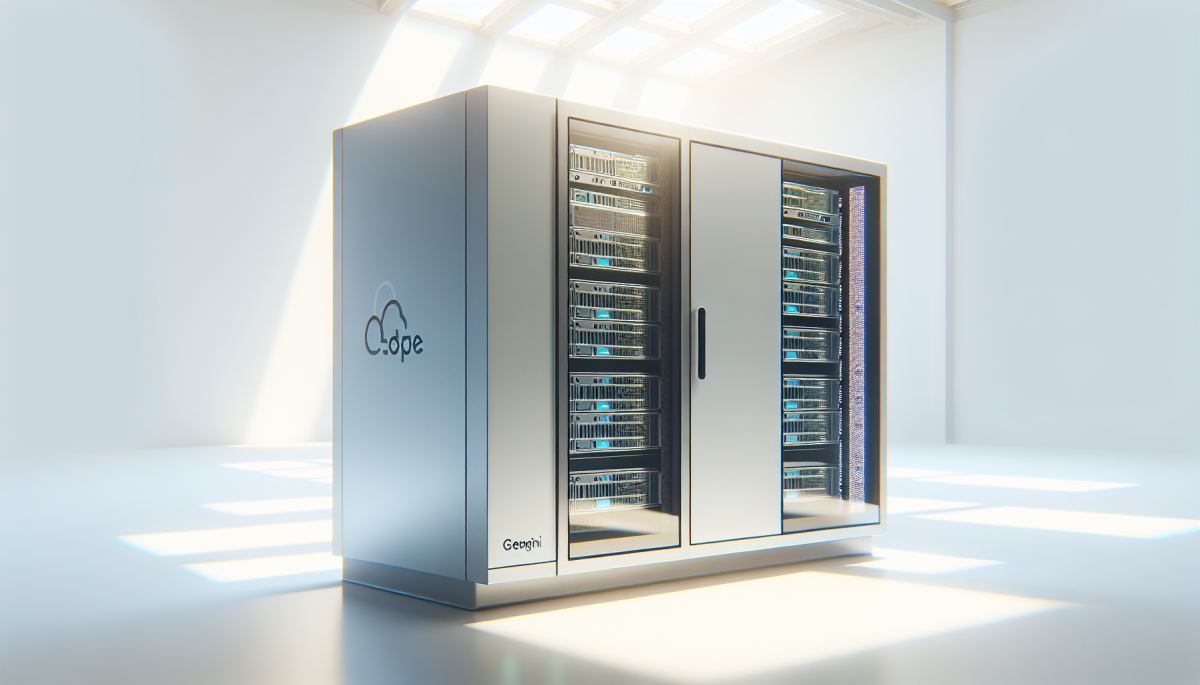
Cirrascale Cloud Services announced at Google Cloud Next 2026 in Las Vegas that it has become the first neocloud provider to deliver Google's Gemini model as a fully private, disconnected on-premises appliance through Google Distributed Cloud. The setup runs on a single air-gapped server, meaning no persistent connection to the internet is required, and the system can be configured to leave no trace when powered down. For industries that have watched the generative AI wave from the shore, unable to wade in because of data sovereignty rules, classified environment restrictions, or strict compliance regimes, this is a significant shift.
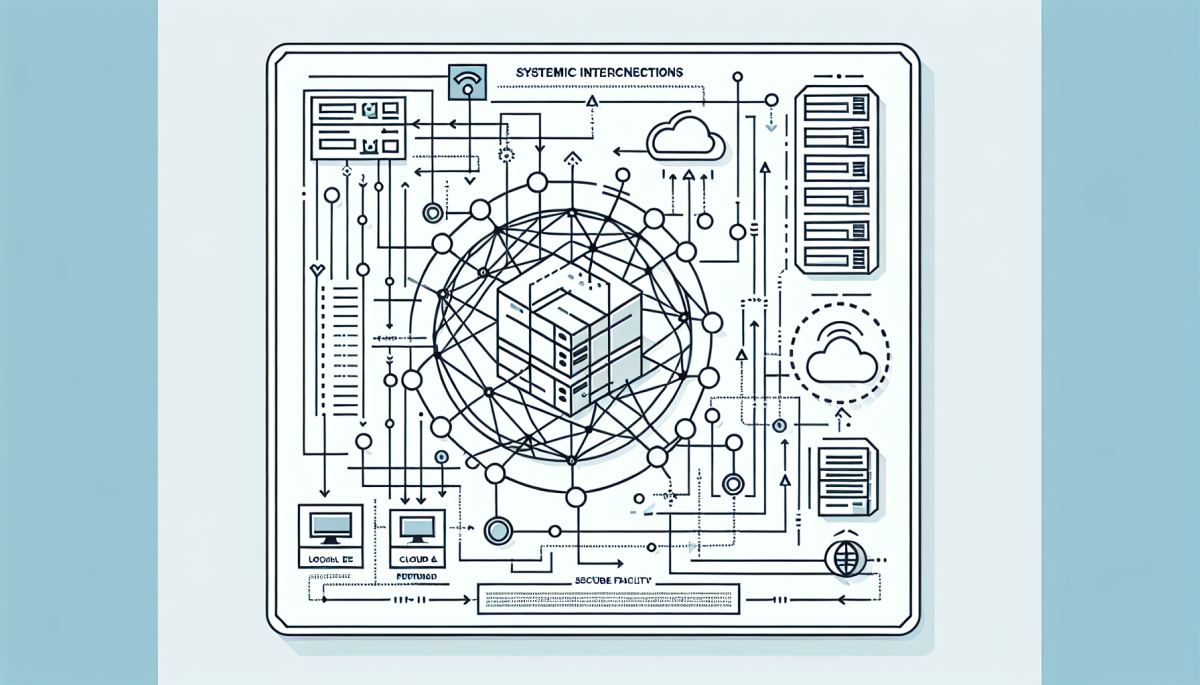
The friction has always been structural. Healthcare systems governed by HIPAA, defense contractors operating under ITAR, financial institutions navigating SEC data-handling rules, and intelligence agencies working in classified environments all share a common problem: their most sensitive workloads cannot legally or operationally touch a public cloud endpoint. Even private cloud deployments often require some form of network connectivity back to a vendor's control plane, which creates a legal gray zone that compliance officers have been unwilling to enter.
Google Distributed Cloud was designed to address exactly this tension. The platform allows Google's software stack, including AI inference capabilities, to run on hardware physically located inside a customer's facility, with no mandatory call-home requirement. What Cirrascale has done is extend that architecture specifically to Gemini, Google's most capable model family, packaging it as an appliance that a regulated organization can rack, run, and, critically, shut down cleanly.
The "vanish when you pull the plug" framing is not just marketing language. In environments where data residency is a legal obligation rather than a preference, the ability to guarantee that no model weights, query logs, or inference outputs persist beyond a defined operational window is genuinely valuable. It transforms AI from a service you subscribe to into infrastructure you control.
The immediate story is about enterprise compliance. The more interesting story is about what happens to the competitive dynamics of AI when frontier models become portable appliances.
For years, the leverage that cloud hyperscalers held over AI adoption was partly technical and partly architectural: the biggest models required the biggest clusters, and those clusters lived in data centers that customers had to connect to. Air-gapped deployment breaks that dependency chain. If Gemini can run on a single server inside a government facility or a hospital network, the question of which cloud provider a regulated institution "belongs to" becomes considerably less sticky. Switching costs drop. Vendor lock-in weakens.
There is a feedback loop worth watching here. As air-gapped deployment becomes normalized, more regulated industries will begin piloting frontier AI, generating institutional knowledge about what these models can and cannot do in high-stakes environments. That knowledge will feed back into procurement decisions, model fine-tuning requirements, and eventually regulatory guidance. Agencies that write the rules for AI use in sensitive sectors will be writing those rules based on real operational experience rather than theoretical risk assessments, which tends to produce more nuanced and permissive frameworks over time.
The neocloud angle is also worth attention. Cirrascale is not AWS or Azure. Its positioning as the first neocloud to offer this capability signals that the market for specialized AI infrastructure, built around specific compliance or performance requirements rather than general-purpose compute, is maturing faster than the hyperscalers' own roadmaps anticipated. Neoclouds that can credibly serve regulated verticals with frontier models may carve out durable niches that are structurally difficult for larger players to reclaim, precisely because the larger players are optimized for scale and connectivity rather than isolation and control.
The deeper question, one that will take years to answer, is whether air-gapped AI changes the risk calculus for deploying these systems in consequential settings. Proponents will argue that local control reduces exposure. Skeptics will note that air-gapping also removes the continuous monitoring, patching, and model update pipelines that cloud deployment enables by default. A Gemini instance running in a disconnected government server room in 2026 may still be running, unchanged and unpatched, in 2028. The security implications of that scenario are not trivial, and they are almost certainly not yet part of the procurement conversations happening in Las Vegas this week.

Discussion (0)
Be the first to comment.
Leave a comment