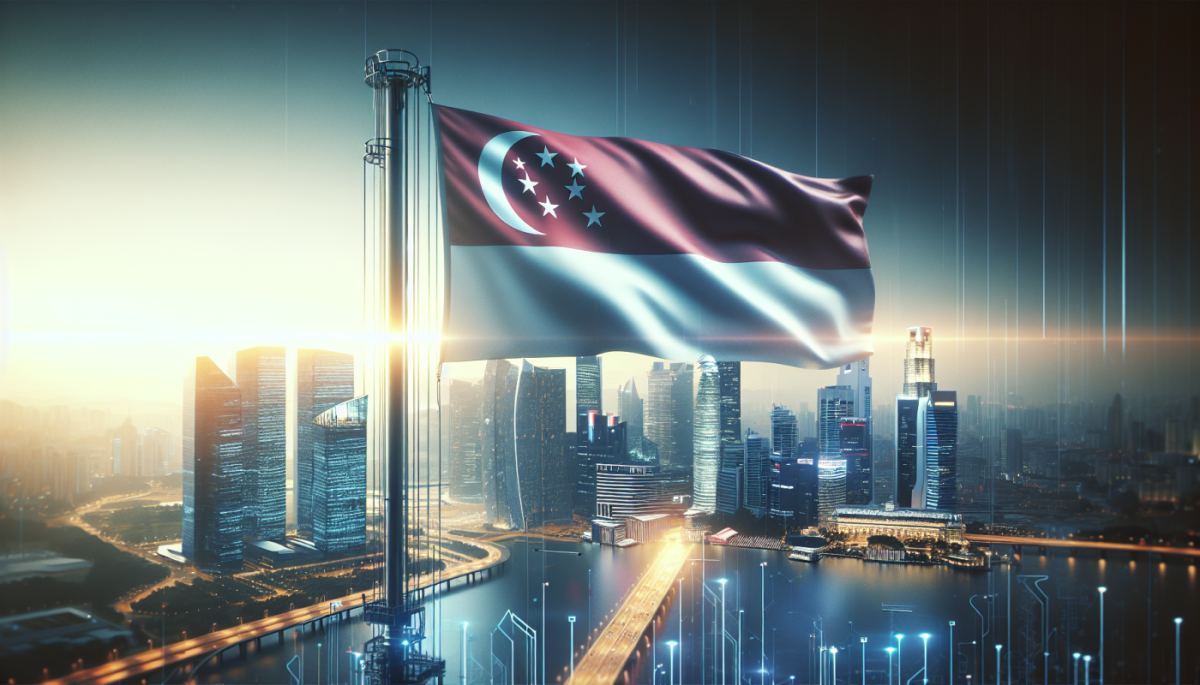
Google DeepMind has opened a new research laboratory in Singapore, marking a deliberate and consequential push into the Asia-Pacific region at a moment when the global race for artificial intelligence dominance is intensifying on every front. The move is not simply a geographic expansion. It is a signal about where DeepMind believes the next generation of AI talent, infrastructure, and institutional partnerships will emerge.
Singapore has long positioned itself as the connective tissue of Southeast Asia, a small city-state that punches far above its weight in finance, logistics, and technology policy. Its government has invested heavily in digital infrastructure and AI readiness, and its universities have quietly built competitive research programs. For DeepMind, choosing Singapore over other regional candidates like Tokyo, Seoul, or Sydney reflects a calculated read of the landscape. The city offers political stability, a deep pool of multilingual technical talent, and proximity to some of the fastest-growing AI adoption markets in the world, including Indonesia, Vietnam, and the broader ASEAN bloc.
What makes this expansion particularly worth watching is the timing. The Asia-Pacific region is not a monolith when it comes to AI development. China has its own formidable ecosystem, largely walled off from Western research institutions. Japan and South Korea are advancing their own national AI strategies. Meanwhile, Southeast Asia represents something of an open field, a collection of rapidly digitalising economies that have not yet locked into any single technological orbit. DeepMind's Singapore lab positions the organisation to build relationships, recruit researchers, and shape research agendas in this contested and consequential space before those alignments harden.
There is also a talent dimension that deserves attention. The global competition for AI researchers has become ferocious, and the traditional gravity wells of London, San Francisco, and New York are no longer the only places where serious work gets done. By establishing a physical presence in Singapore, DeepMind gains access to researchers who may prefer to remain in the region for personal, cultural, or professional reasons, people who might never relocate to a Western hub but who are entirely capable of contributing to frontier research. This is not a minor consideration. Some of the most interesting work in machine learning, reinforcement learning, and AI safety is now happening at institutions across Asia, and proximity matters for collaboration.
The second-order consequences of this move extend well beyond DeepMind itself. When a research organisation of this calibre plants a flag in a city, it tends to catalyse a broader ecosystem. Other companies take notice. Universities recalibrate their hiring and curriculum priorities. Governments adjust their funding strategies. Startups cluster nearby hoping to attract talent that spills out from the anchor institution. Singapore has seen this dynamic play out before with financial services and biomedical research, and there is every reason to expect a similar compounding effect in AI.
There is also a geopolitical subtext worth naming. As Western governments grow more cautious about Chinese technology investment and as China builds its own parallel AI infrastructure, Singapore occupies an unusual position as a place that maintains productive relationships with both Washington and Beijing. A DeepMind lab there does not resolve those tensions, but it does insert a major Western AI institution into a geography where the lines are still being drawn. How the lab navigates regional partnerships, data governance questions, and research publication norms will itself become a kind of soft power exercise.
For the broader AI research community, the more interesting question is what the Singapore lab will actually work on. DeepMind has historically focused on fundamental research, from protein folding to reinforcement learning to AI safety, rather than near-term commercial applications. Whether the Singapore outpost follows that tradition or tilts toward applied problems relevant to the region, healthcare systems, climate adaptation, urban infrastructure, will say a great deal about how DeepMind understands its own mission as it scales globally.
The lab is open. The researchers will arrive. And the quiet competition to define what AI development looks like across the Asia-Pacific's next decade has just gotten a significant new participant.
Discussion (0)
Be the first to comment.
Leave a comment