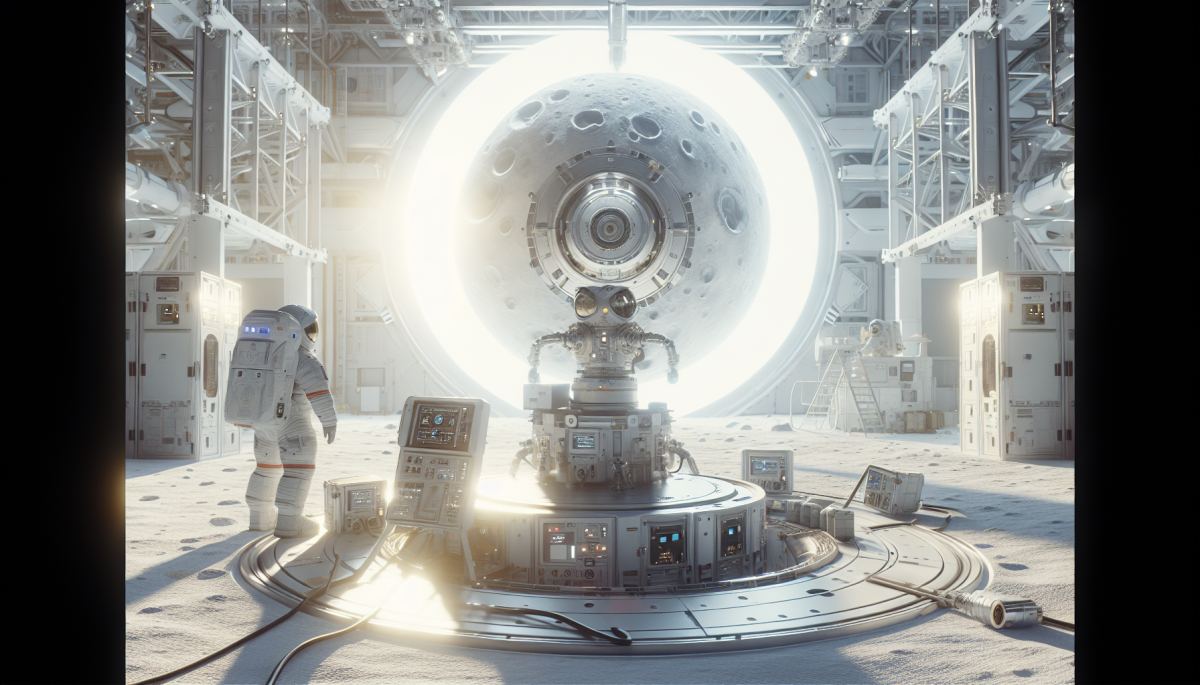
The crew is set. The mission is real. And for the first time in more than half a century, human beings are on a confirmed trajectory back to the lunar surface. NASA's Artemis program has formally assigned four astronauts to the Artemis II mission, the first crewed flight around the Moon since Apollo 17 in December 1972. The crew includes Reid Wiseman, Victor Glover, Christina Koch, and Canadian astronaut Jeremy Hansen, the last of whom will become the first person from outside the United States to travel to lunar distance. NASA Administrator Bill Nelson, reflecting on the announcement, said simply: "I don't think we could be more pleased."

That understated satisfaction masks an enormous amount of institutional pressure, geopolitical calculation, and engineering ambition compressed into a single mission. Artemis II is not a landing, it is a flyby, a roughly ten-day journey that will take the crew around the Moon aboard the Orion spacecraft atop the Space Launch System rocket. But its significance extends well beyond the flight profile. It is the human proof-of-concept that NASA and its international partners need before attempting an actual lunar landing on Artemis III, which is currently targeting the Moon's south pole, a region of intense scientific and strategic interest due to confirmed water ice deposits.
The Moon's south polar region has become the focal point of a new kind of space race, one less about national pride and more about resource access. Water ice locked in permanently shadowed craters can theoretically be converted into hydrogen and oxygen, both for life support and for rocket propellant. That makes the south pole not just a scientific destination but a potential logistics hub for deeper space exploration. China's lunar program has the same region in its sights, with plans for a crewed landing before 2030. The overlap in ambition is not coincidental, and it is not lost on policymakers in Washington.
This is where the systems-level consequences of Artemis II become most interesting. The mission itself carries no landing hardware and poses no direct competitive threat. But its success or failure will shape the credibility of the entire Artemis architecture at a moment when international partners, including the European Space Agency, the Japan Aerospace Exploration Agency, and the Canadian Space Agency, are deciding how deeply to commit resources and political capital to the American-led lunar program. Jeremy Hansen's inclusion on the crew is partly a signal to those partners: Canada contributed the Canadarm3 robotic system to the Gateway lunar space station, and Hansen's seat is, in part, a diplomatic receipt for that investment.
If Artemis II encounters significant delays or technical failures, the downstream effects could ripple outward in ways that go far beyond NASA's budget cycle. Partner nations may recalibrate their commitments. Commercial contractors building lunar landers and surface systems may face funding uncertainty. And the political window for sustaining public and congressional enthusiasm, always narrow for long-duration space programs, could begin to close.
The Artemis program has already weathered years of delays, cost overruns, and skepticism. The Space Launch System, the most powerful rocket NASA has ever built, costs an estimated $4.1 billion per launch according to NASA's own inspector general reports, a figure that has drawn sustained criticism from analysts and commercial spaceflight advocates alike. SpaceX's Starship, which is contracted to serve as the Artemis III lunar lander, is still in active development and has had its own turbulent testing history. The interdependencies between these systems mean that a delay in any single component cascades through the entire mission sequence.
And yet the crew announcement carries a weight that spreadsheets and timelines cannot fully capture. Christina Koch, who already holds the record for the longest single spaceflight by a woman, will become the first woman to travel to lunar distance. Victor Glover will be the first Black astronaut to do the same. These are not incidental details. They are part of a deliberate effort to make the Artemis program feel like a different kind of Moon mission than Apollo, one that reflects a broader slice of humanity at a moment when the meaning of that word is being actively contested in space policy circles around the world.
The four astronauts training today will carry all of that forward with them when they finally leave Earth's orbit. Whether the systems built around them hold together long enough to get them there, and back, is the question that the next several years will answer.
References
- NASA (2023) — NASA Names Astronauts to Next Moon Mission, First Crew Under Artemis
- NASA Office of Inspector General (2022) — NASA's Management of the Artemis Missions
- ESA (2023) — Artemis II: ESA's role in the first crewed Artemis mission
- Canadian Space Agency (2023) — Jeremy Hansen selected for Artemis II
Discussion (0)
Be the first to comment.
Leave a comment