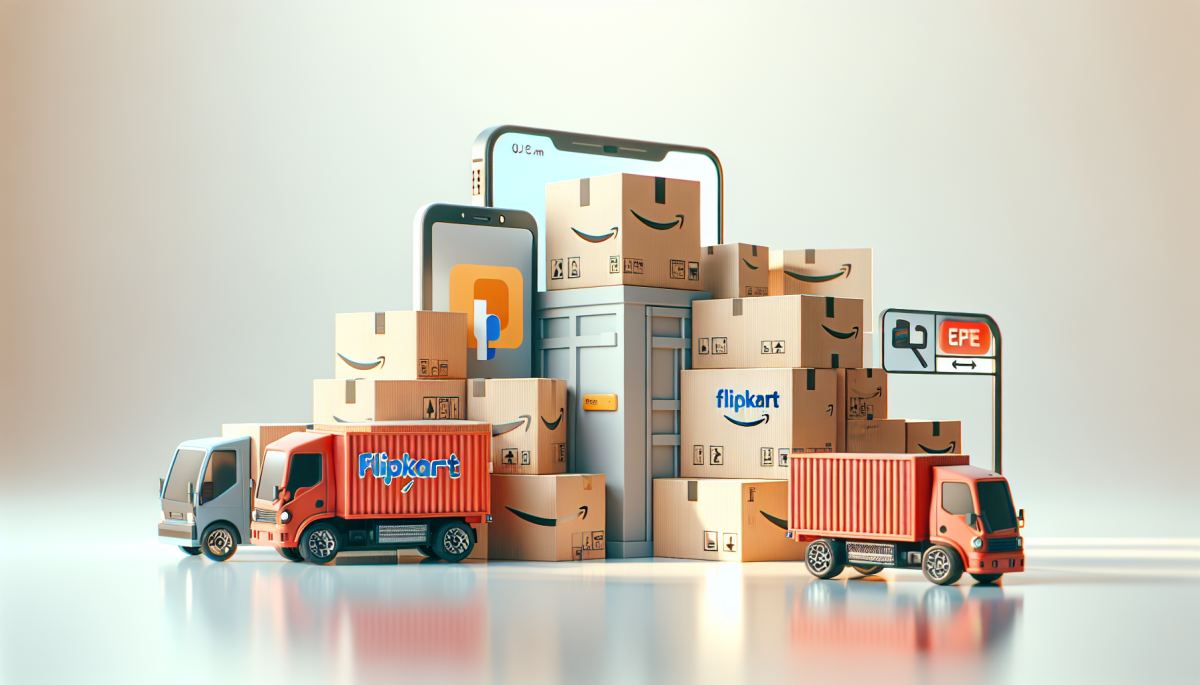
India's quick commerce sector, once the exclusive playground of nimble startups like Blinkit, Zepto, and Swiggy Instamart, is facing a structural reckoning. Walmart-owned Flipkart and Amazon are moving aggressively into the space, and the pressure they are applying goes well beyond simple competition. It is the kind of pressure that reshapes entire markets.
Flipkart's expansion strategy is particularly pointed. The company is pushing its quick delivery operations beyond India's major metropolitan areas, reaching into Tier 2 and Tier 3 cities where startups have historically had thinner coverage and shallower pockets. Paired with heavy discounting, this geographic push is not just a land grab. It is a deliberate effort to capture the customer acquisition moment before smaller players can establish loyalty. Analysts tracking the sector have flagged this combination as a compounding risk for startups that are already burning cash to build out their dark store networks and delivery infrastructure.
The economics of quick commerce have always been brutal. Delivering groceries and household goods in under 30 minutes requires dense networks of micro-warehouses, armies of gig workers, and sophisticated routing software. Margins are thin by design, and profitability has remained elusive for most players. Blinkit, now owned by Zomato, has made the most visible progress toward sustainability, but even it operates in a market where customer switching costs are essentially zero. When Flipkart or Amazon offer a steeper discount on the same bag of rice, the app gets deleted.

What makes the current moment different from earlier competitive skirmishes is the sheer financial asymmetry involved. Walmart reported global revenues of over $648 billion in fiscal year 2024. Amazon's resources are similarly vast. When these companies decide to subsidize delivery costs or absorb losses on discounted goods in India, they can do so for far longer than any venture-backed startup can withstand. This is not a fair fight in any conventional sense. It is a war of attrition dressed up as consumer convenience.
The startup response has largely been to double down on speed and hyperlocal assortment, areas where incumbents are structurally slower to adapt. Zepto, for instance, has leaned into a curated product selection and a 10-minute delivery promise that larger platforms struggle to match consistently. But these advantages are not permanent. As Flipkart scales its infrastructure and Amazon refines its logistics playbook in India, the operational gaps narrow.
There is also a regulatory dimension worth watching. India's foreign direct investment rules have historically restricted how global e-commerce players can operate in the country, particularly around inventory-led models. But quick commerce, with its dark store architecture and platform framing, has so far navigated these restrictions with relative ease. If regulators begin scrutinizing whether heavy discounting by foreign-backed platforms constitutes predatory pricing, the competitive landscape could shift again, though enforcement in this area has historically been slow and inconsistent.
The deeper systemic consequence of this consolidation pressure may not be felt by the startups themselves but by the gig workers and small suppliers who depend on the ecosystem's diversity. When two or three dominant platforms control the majority of quick commerce volume, their ability to set delivery fees, commission rates, and supplier terms becomes nearly absolute. India already has an estimated 15 million gig workers in platform-dependent roles, according to government estimates, and the bargaining power of that workforce is inversely related to the number of competing platforms bidding for their labor.
For consumers, the short-term picture looks attractive. More competition means lower prices and faster delivery. But markets that consolidate around deep-pocketed incumbents tend to see prices recover once rivals are squeezed out, a pattern documented repeatedly in ride-hailing, food delivery, and e-commerce across multiple geographies. India's quick commerce boom is still young enough that this endpoint feels distant, but the structural forces now in motion are pointing in a familiar direction.
The startups that survive this phase will likely be those that find defensible niches, whether through private-label products, superior last-mile technology, or regional dominance in markets the giants find uneconomical to serve. The ones that simply compete on speed and price against Walmart's balance sheet are playing a game they are unlikely to win.
Discussion (0)
Be the first to comment.
Leave a comment