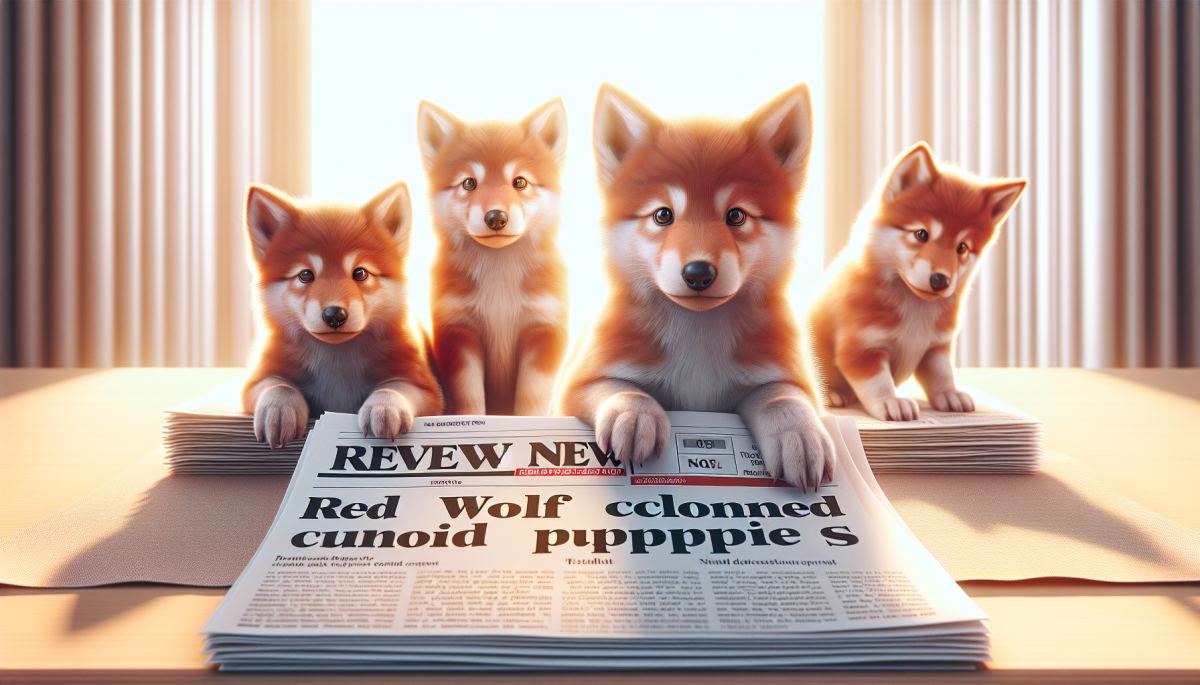
The red wolf nearly ceased to exist in the wild before most Americans had ever heard of it. By the late 1970s, the species had been hunted, poisoned, and habitat-stripped to a population so small that the U.S. Fish and Wildlife Service made the radical decision to capture every last wild individual and begin a captive breeding program from scratch. Today, fewer than 20 red wolves roam free in North Carolina, making Canis rufus one of the most endangered canids on the planet. Against that backdrop, Colossal Biosciences — the Dallas-based company that has made headlines for its de-extinction ambitions involving woolly mammoths and Tasmanian tigers — announced that it had successfully cloned red wolves, producing living animals from the genetic material of individuals not currently represented in the captive breeding population.
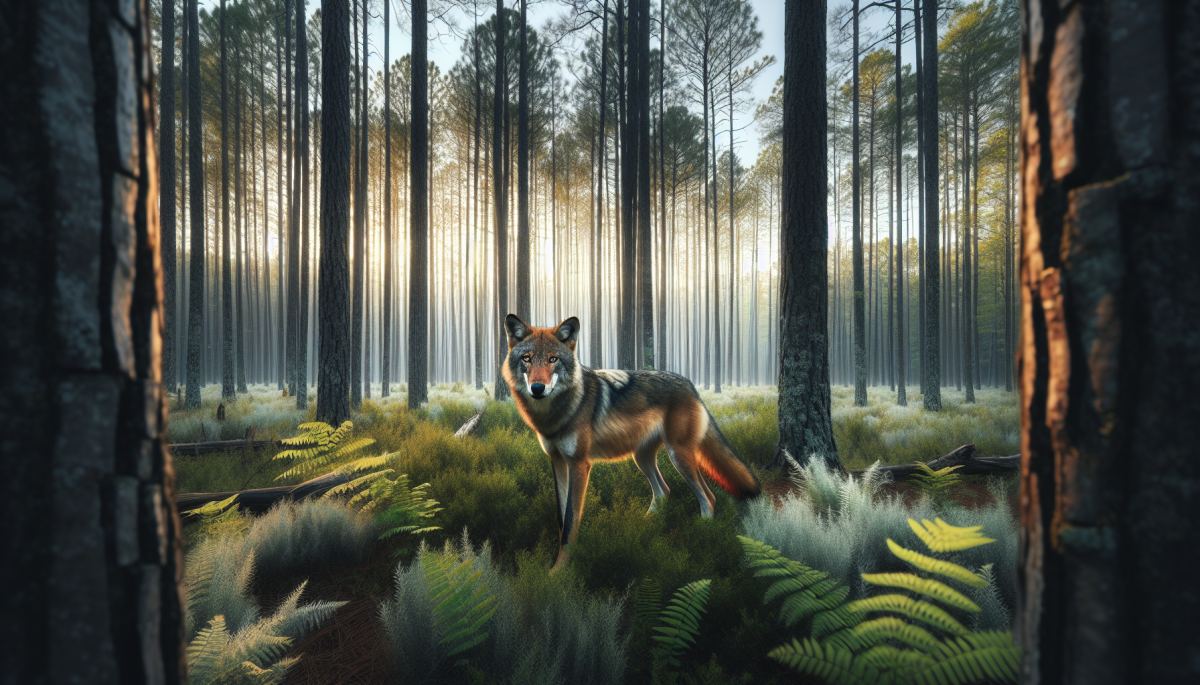
The announcement landed with the kind of weight that forces a genuine reckoning. Cloning, in the context of conservation, is not science fiction. The black-footed ferret was cloned in 2020 using cells frozen decades earlier, and that effort, led by Revive & Restore in partnership with the U.S. Fish and Wildlife Service, demonstrated that cryopreserved genetic material could meaningfully expand the gene pool of a species on the edge. Colossal's red wolf work follows a similar logic: the animals cloned reportedly carry genetic diversity that has been lost from the living captive population, which has suffered from the compounding problem of inbreeding that plagues all small, isolated gene pools over time.
The science, in other words, is real. The harder questions are everything that comes after.
Genetic diversity is not merely a technical metric. It is the raw material of a species' ability to respond to disease, climate shifts, and novel ecological pressures. When a captive population shrinks to a founding group of fewer than a dozen individuals — as the red wolf program effectively did — the gene pool narrows with each generation. Harmful recessive traits become more likely to express. Immune system variability collapses. The population becomes, in a biological sense, fragile in ways that are invisible until a new pathogen or environmental stressor arrives.
Colossal's clones, if they carry genuinely distinct genetic lineages, could act as a kind of biological time capsule, reintroducing variation that the captive program has been slowly losing for four decades. This is the most compelling argument for what the company is doing. It is not resurrection for its own sake. It is an attempt to restore the evolutionary toolkit of a species that humans nearly erased.
But cloning introduces its own complications. A cloned animal carries the nuclear DNA of its donor, but it gestates in a surrogate and is raised in an environment that shapes its behavior, stress responses, and social learning. Whether a cloned red wolf can be successfully integrated into a breeding program — and whether its offspring will thrive in the wild — depends on factors that genomics alone cannot resolve. The red wolf's recovery has always been as much a social and political problem as a biological one. Landowners in eastern North Carolina have resisted the reintroduction program for years, and the wild population has been further destabilized by hybridization with coyotes, a problem that has no clean genetic solution.
The second-order consequence worth watching here is what Colossal's announcement does to the broader conservation funding landscape. De-extinction and high-profile cloning efforts attract venture capital and media attention in ways that quieter, less glamorous habitat protection work simply does not. There is a real risk that the narrative of technological salvation — the idea that science can always pull a species back from the brink — subtly erodes the political urgency of preventing species from reaching that brink in the first place. If extinction feels reversible, the pressure to avoid it weakens.
Colossal has raised over $225 million in funding and operates at the intersection of conservation biology and Silicon Valley optimism. That combination produces genuine innovation, but it also produces incentives to emphasize breakthroughs over the slow, unglamorous work of ecosystem management, land protection, and predator-prey relationship restoration that any recovered red wolf population will ultimately require. Cloning can rebuild a genome. It cannot rebuild the longleaf pine savannas and coastal marshes that red wolves need to survive.
The wolves that Colossal's scientists coaxed into existence this year are, by any measure, a remarkable achievement. Whether they become a footnote or a turning point depends less on the company's next press release and more on whether the political will exists to give those animals somewhere real to live.
Discussion (0)
Be the first to comment.
Leave a comment